01What it is
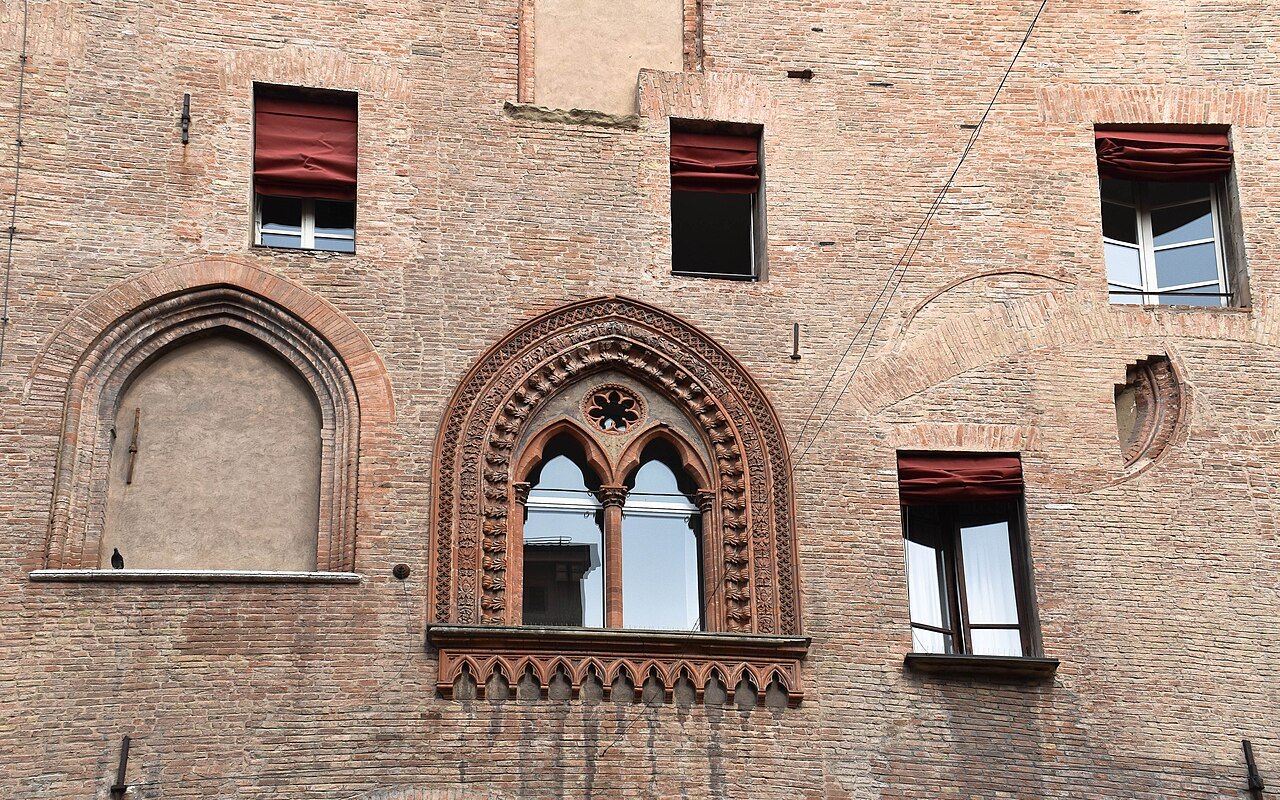
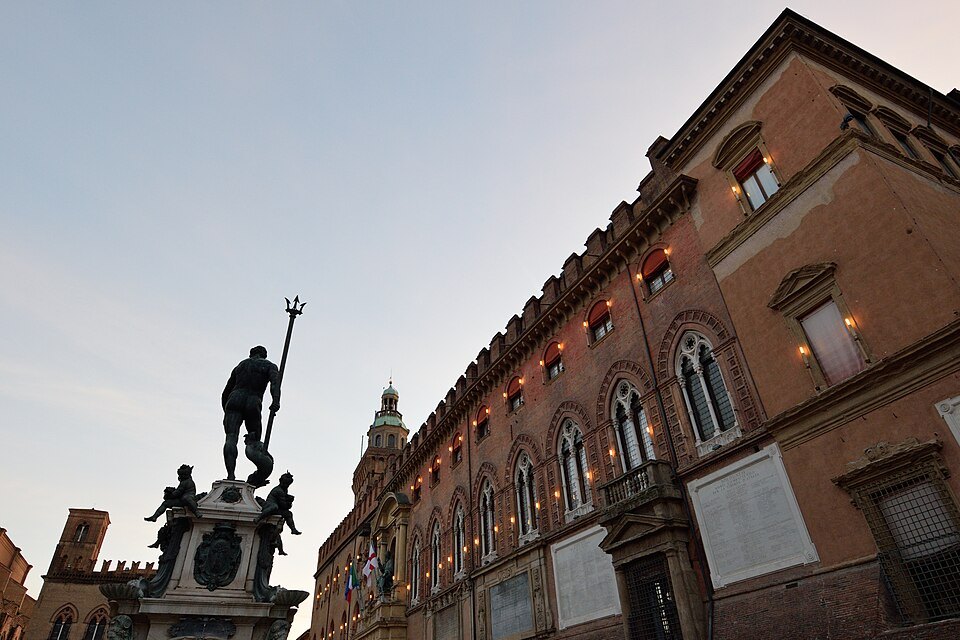
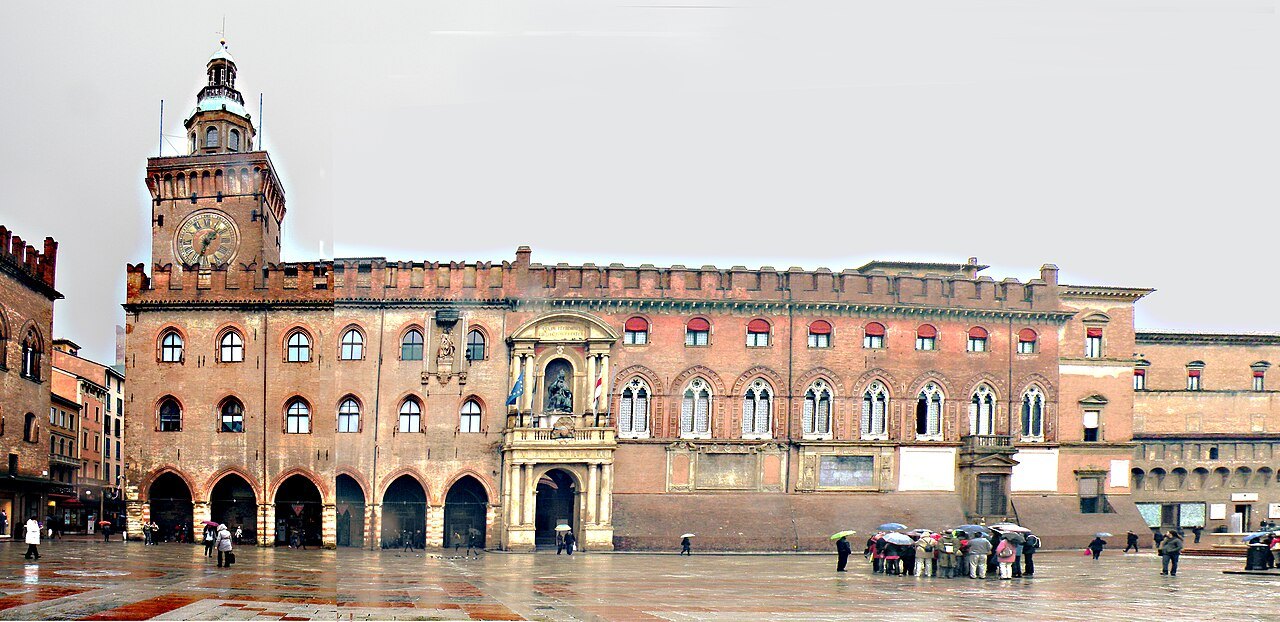
Palazzo d'Accursio, also called Palazzo Comunale, fills the west side of Piazza Maggiore. It grew from the house of Accursius, a thirteenth-century law teacher of the university, and has been the seat of the city government for centuries.
Over the main door sits a bronze of Pope Gregory XIII — a Bolognese, and the pope whose name is on the Gregorian calendar. Higher up, set into the facade, is a terracotta Madonna by Niccolò dell'Arca, the sculptor of the Compianto.
02The staircase
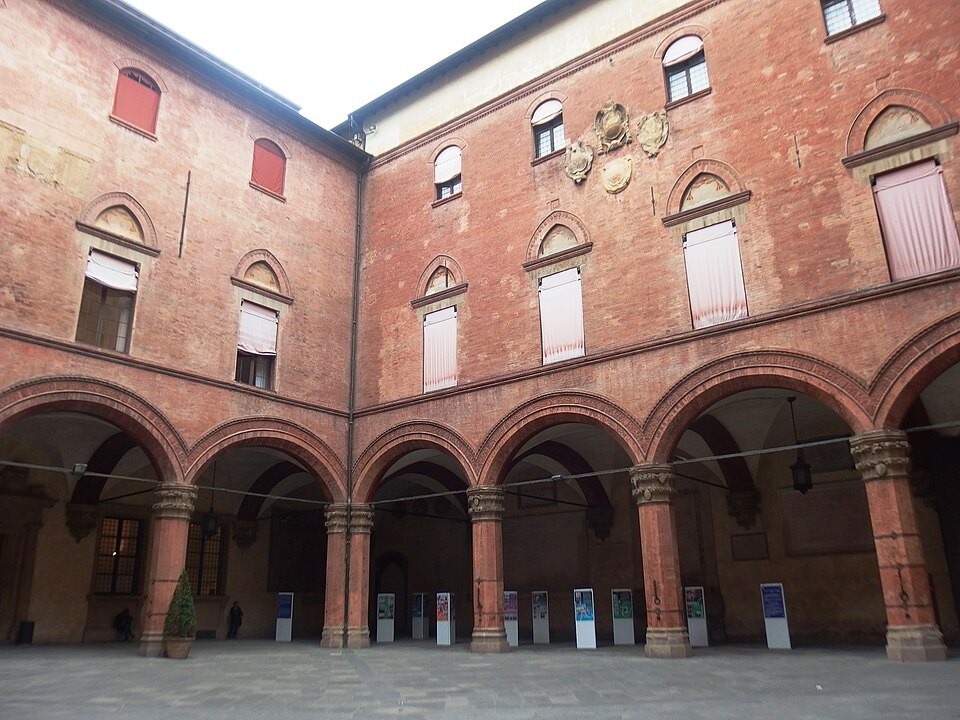
Inside the courtyard, a broad ramped staircase rises to the upper floors in shallow, wide steps. It is traditionally attributed to Bramante and was designed so that riders could go up on horseback — a town hall where the important visitors did not dismount.
03A library over a buried city
Part of the complex is the Salaborsa, a former exchange hall that is now the city's public library. Its floor is partly glass, and beneath your feet are excavated remains of Roman and medieval Bologna.
Upstairs, the city's art collections occupy the old state rooms.
04The wall of faces
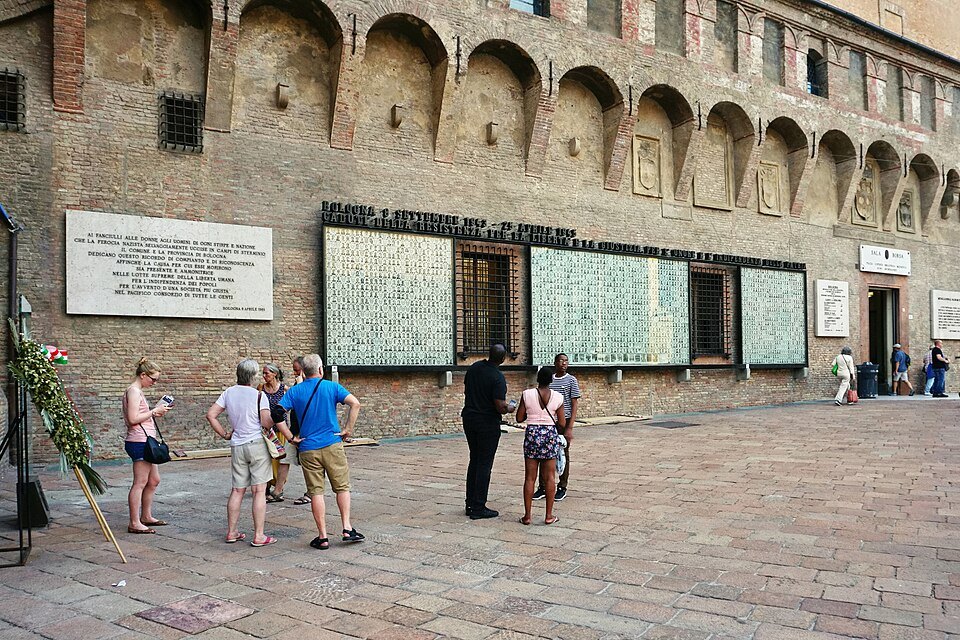
Outside, on the wall facing Piazza del Nettuno, a memorial holds the photographs of the partisans of Bologna killed in the Second World War. It is a place people stop in silence, and it deserves that.