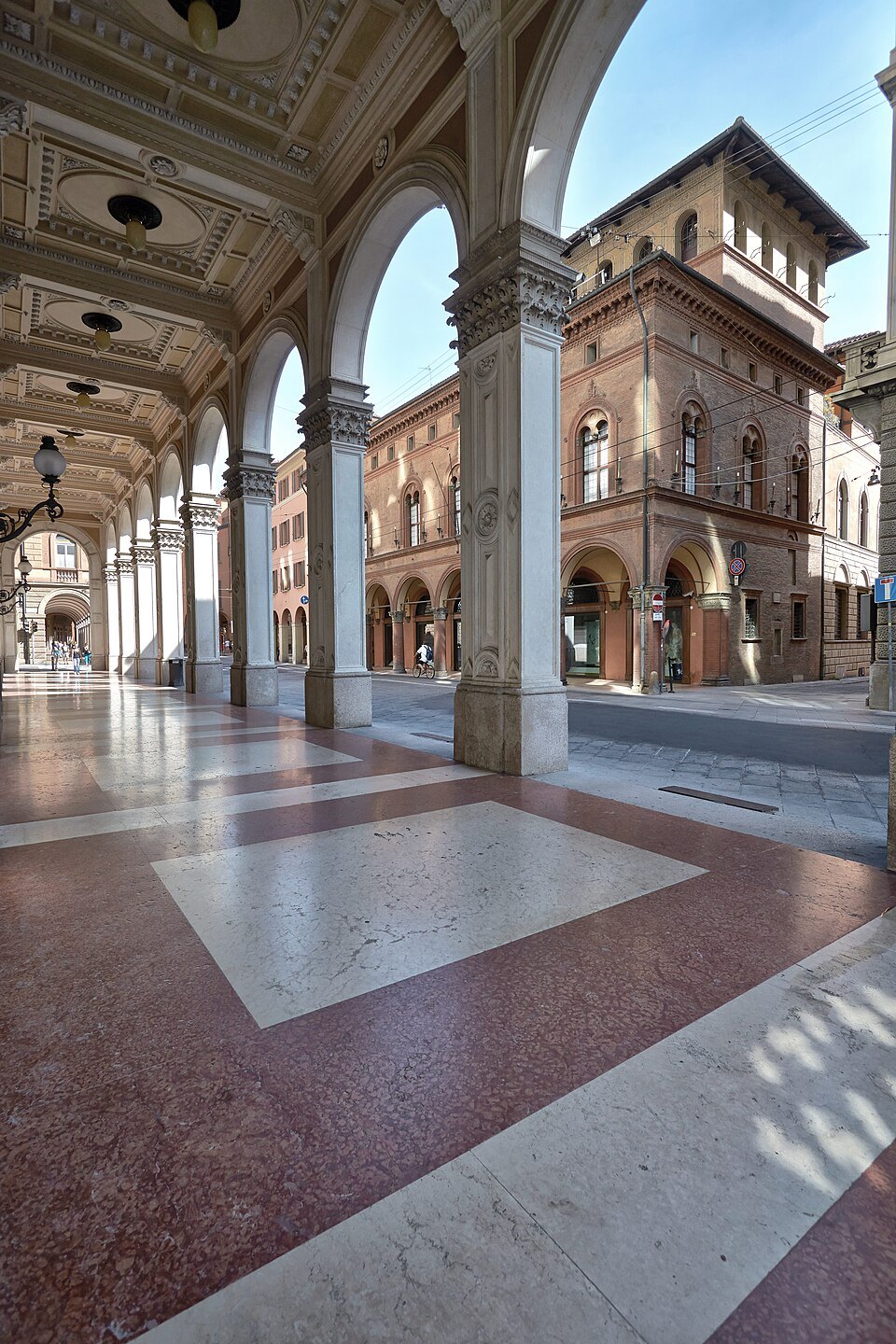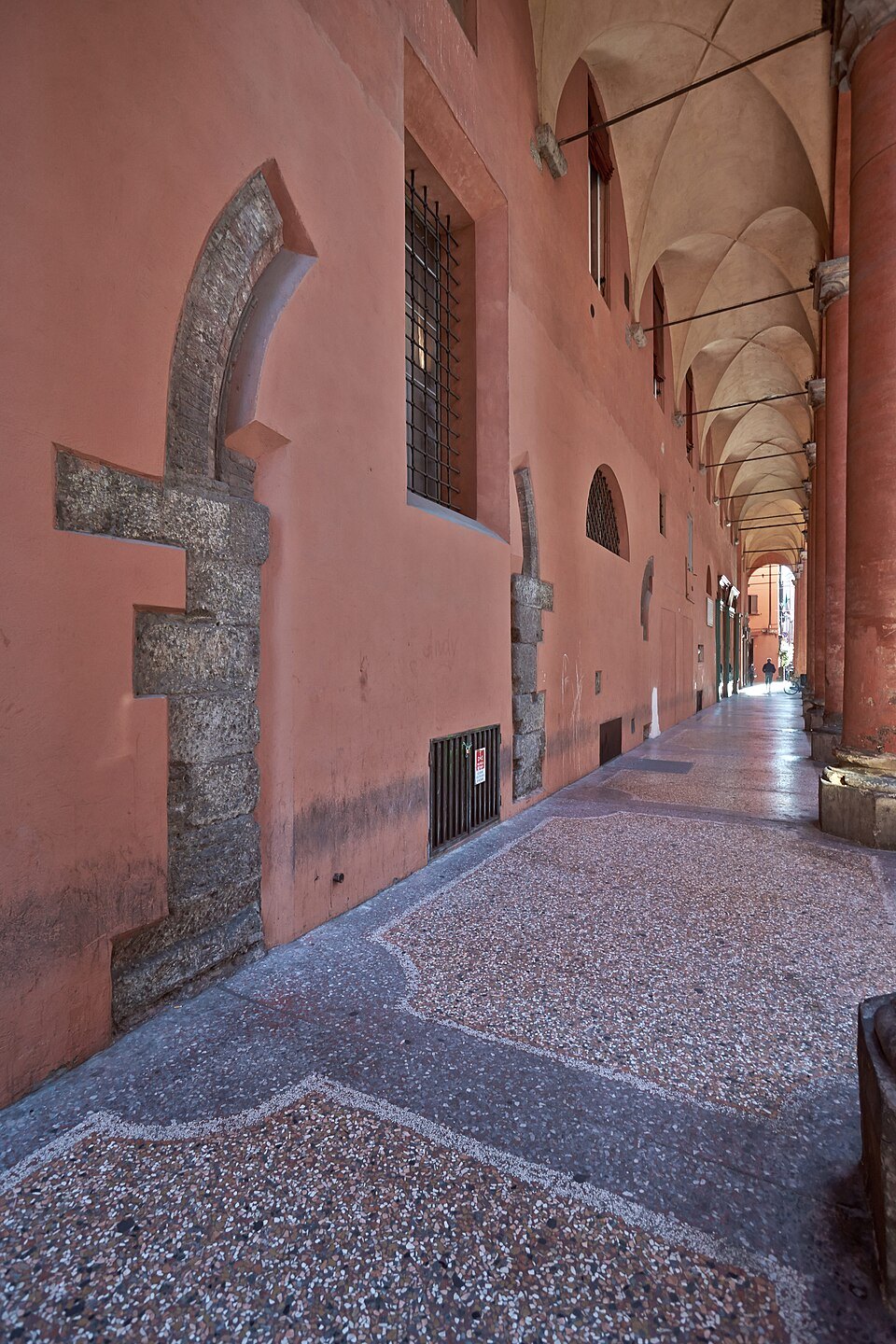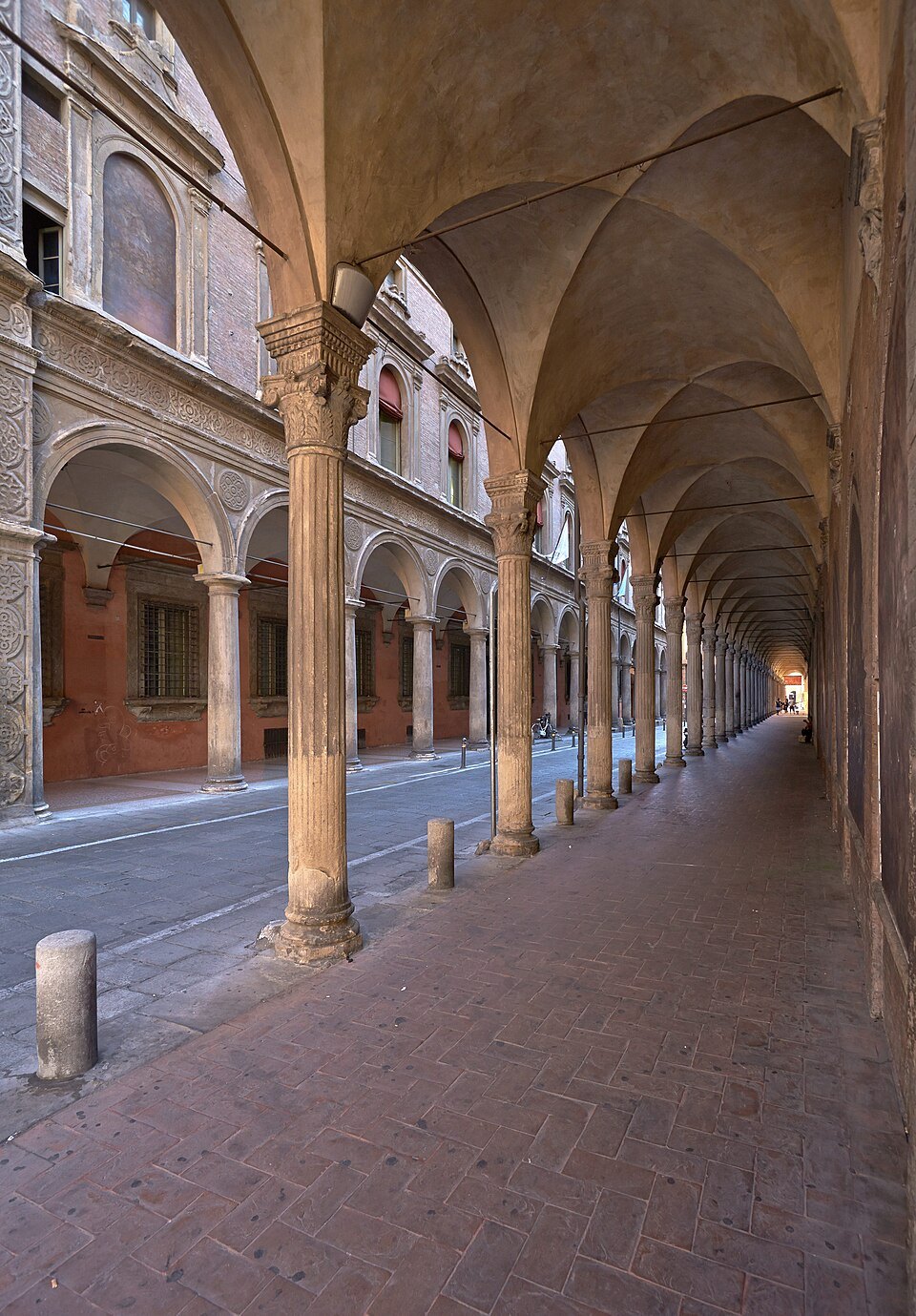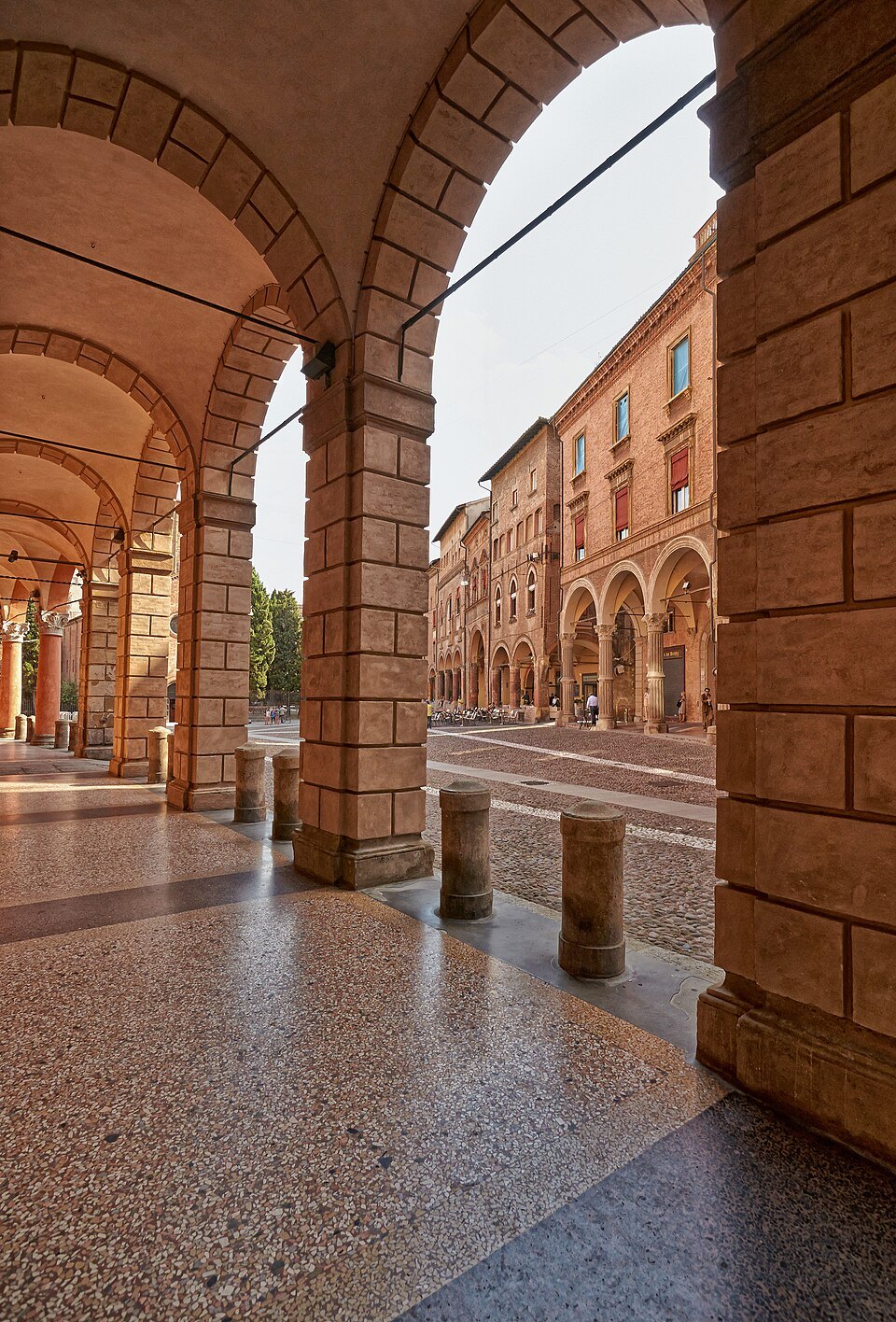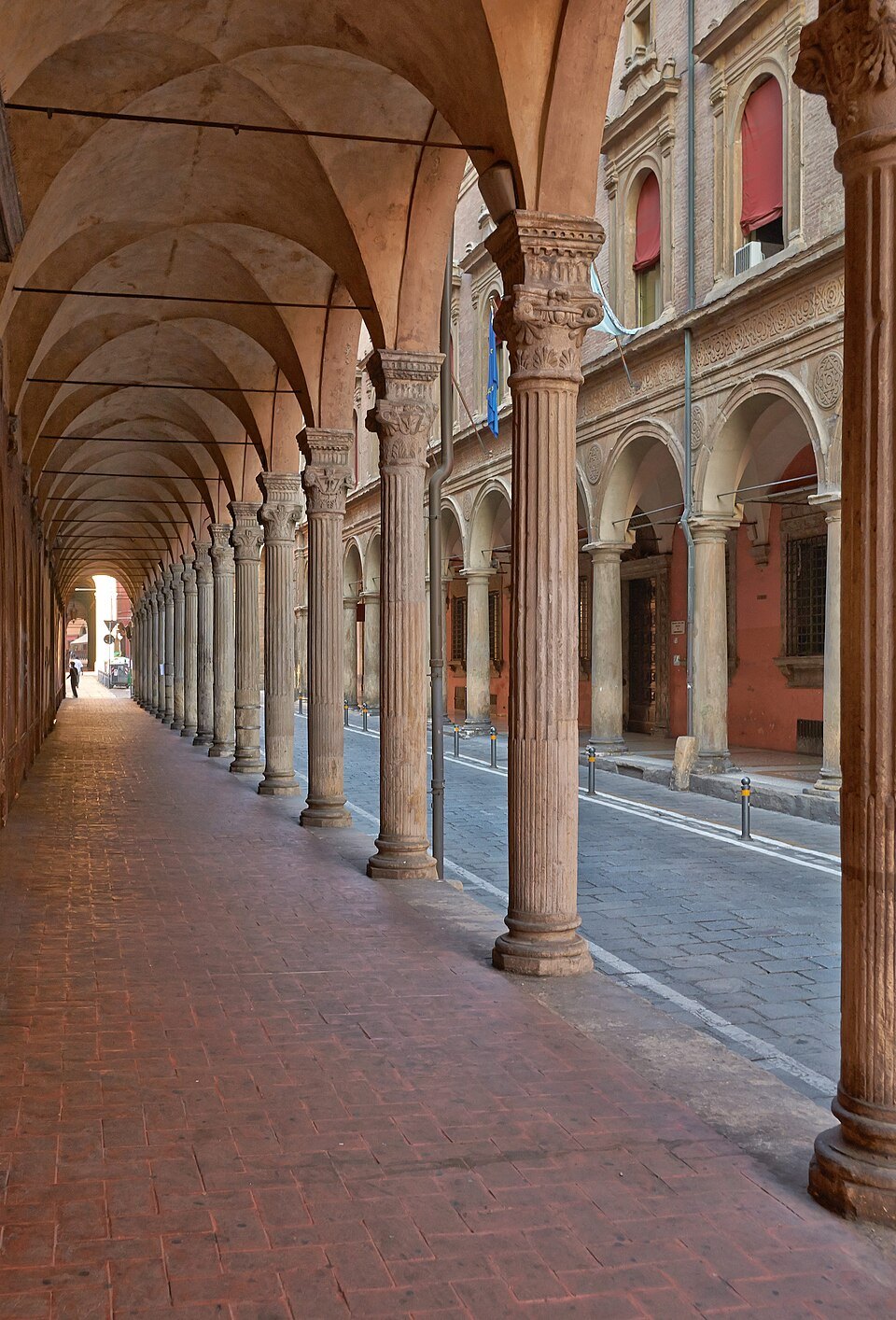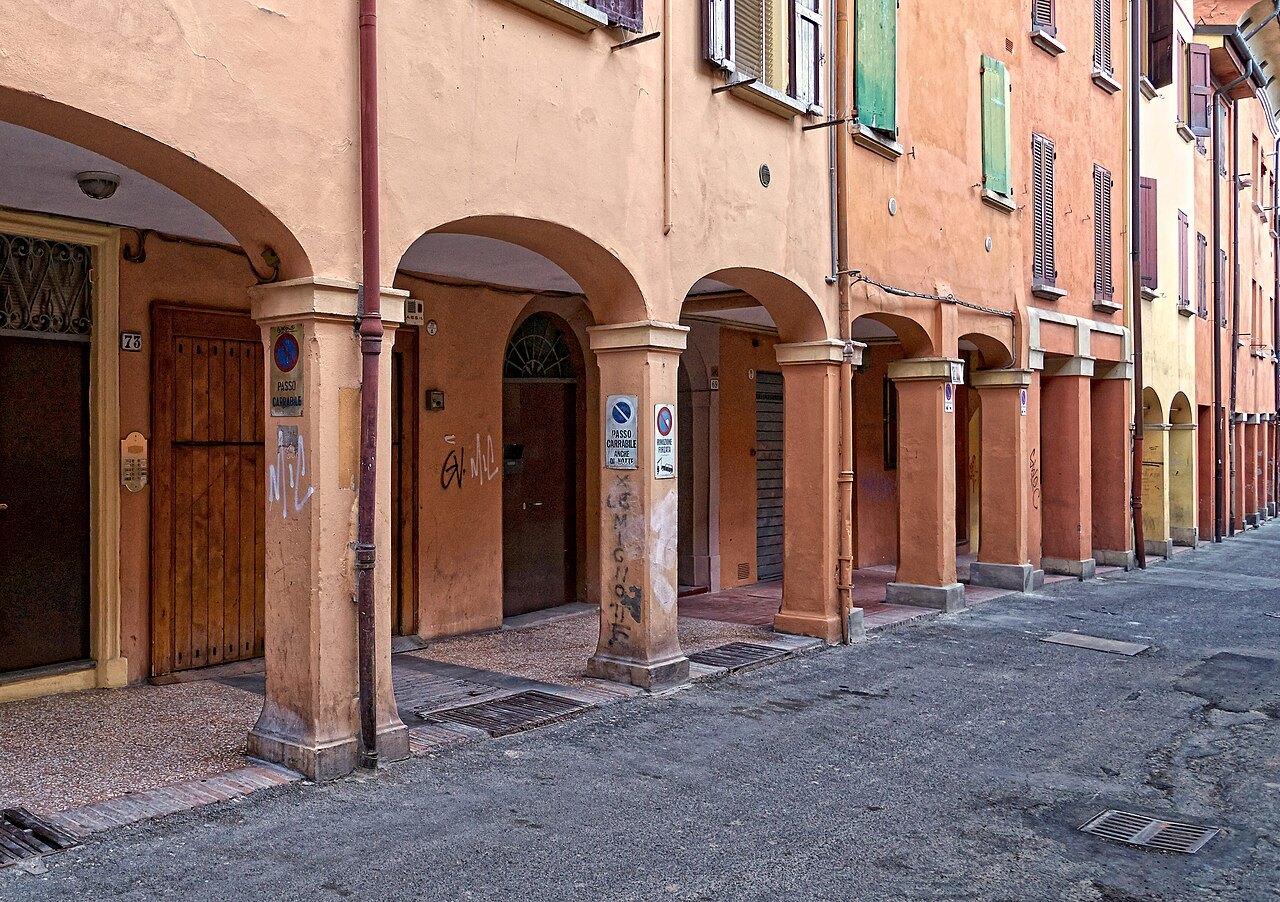
- timber posts — Casa Isolani
- brick and stone — the medieval streets
- the Portico dei Servi
- the Pavaglione
- the climb to San Luca
- the 1950s Barca block
01What they are
Bologna has about 62 kilometers of porticoes, covered walkways running along the front of its buildings. They were inscribed on the UNESCO World Heritage list in 2021.
They are not decoration. They are how the city works: you can cross most of the center in a downpour or in August sun without leaving shade, and a Bolognese giving directions will often describe the route by its porticoes.
02Why they exist
As the university drew students in the Middle Ages, the city ran out of room. Owners built out over the street at first-floor level, propping the extension on posts.
The commune turned the habit into law: statutes of the late thirteenth century required porticoes on new houses and set them high enough for a rider to pass beneath, and public ground under them had to stay open to everyone.
03Read them as you walk
Timber posts are the oldest kind, and a few survive — the tall wooden porch of Casa Isolani on Strada Maggiore is the famous one. Brick and stone arcades replaced them almost everywhere.
Then the grand ones: the Portico dei Servi along Strada Maggiore, the Pavaglione beside the Archiginnasio, and the long climb to San Luca. The UNESCO list also includes a 1950s housing block in the Barca district, because Bologna never stopped building them.
04How to use them
Treat the porticoes as your map of the center. See getting around for walking the city this way.
Note The space under a portico is shared: cafés set out tables, bicycles are parked, and people walk fast. Keep right and do not stop dead in the middle.