01The tower century
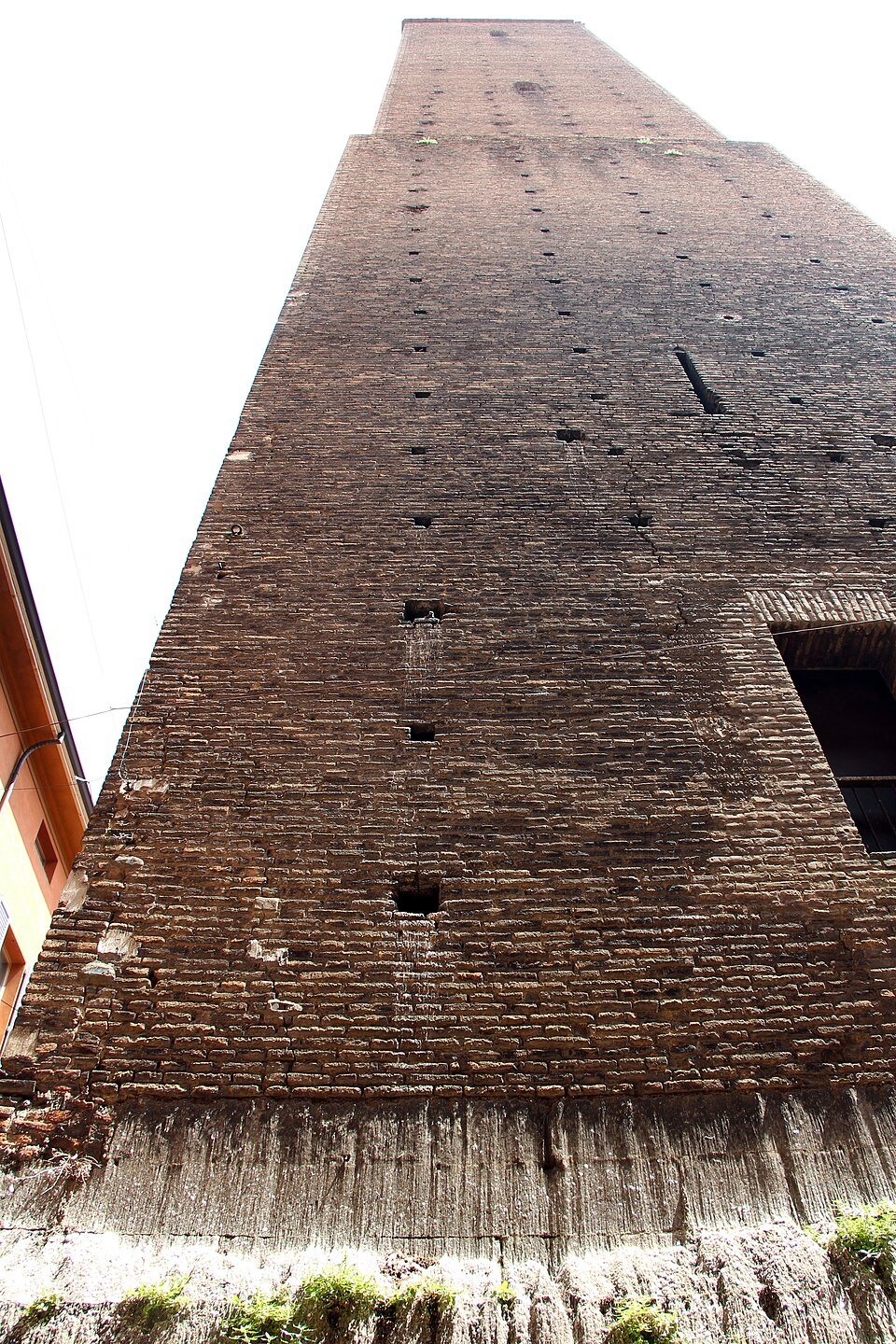
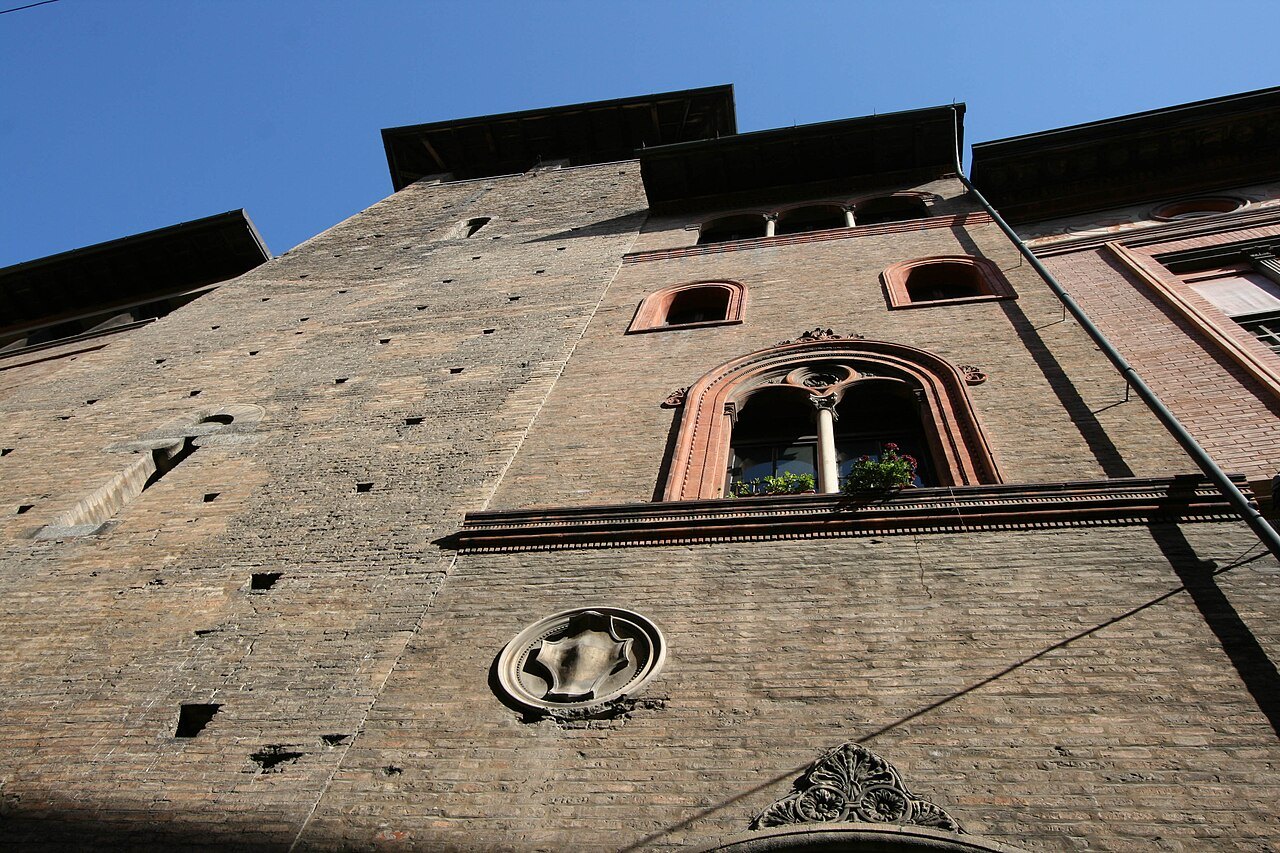
In the twelfth and thirteenth centuries Bologna's powerful families built towers beside their houses — for defense in street feuds, and for show. The city bristled with dozens of them. Most were pulled down, cut down or collapsed; around twenty survive.
The two towers are the famous pair. The others hide in plain sight: the Prendiparte and the Azzoguidi, known as the Altabella, are among the tallest survivors, and the Galluzzi rises from a small courtyard near the cathedral. Look up at street corners and you will start to see them everywhere.
02Why red
The city is built of brick and roofed with terracotta, and its plaster is painted in ochres and reds — seen from a tower, the whole center is one warm color. In the twentieth century the nickname took a second meaning too, for Bologna's long left-wing politics.
03Three rings of walls
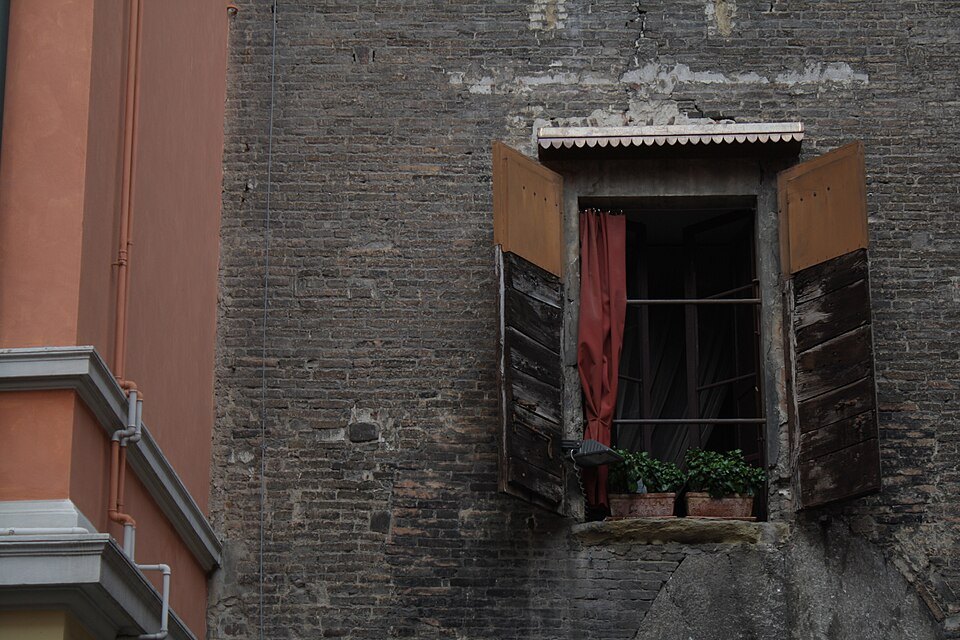
The oldest core was walled in late antiquity. In the twelfth century a wider circle was built, and a few of its small gate towers, the torresotti, still stand — one on via Piella by the Finestrella.
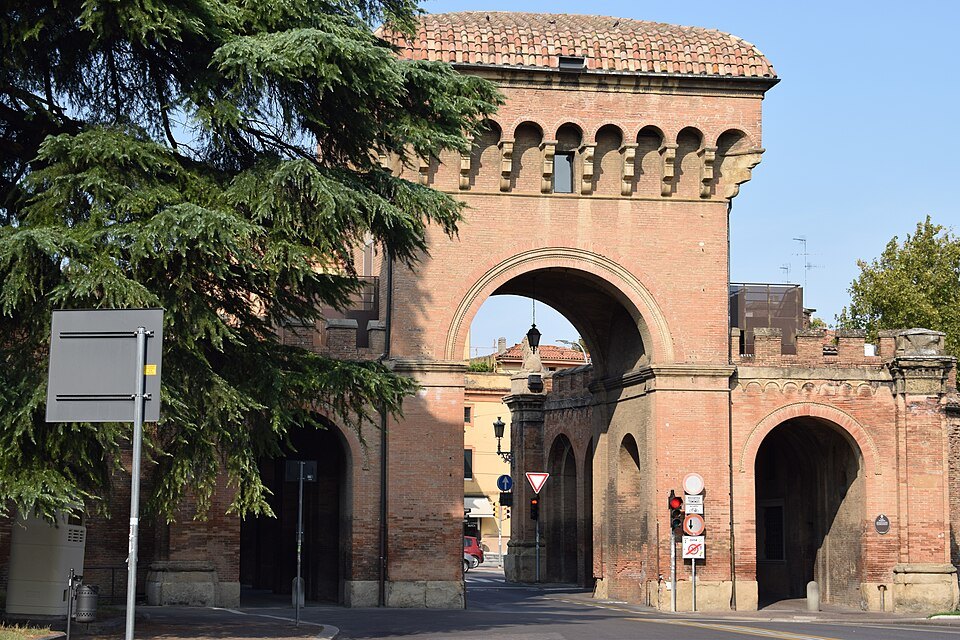
The third circle, of the thirteenth and fourteenth centuries, enclosed the whole historic center. Its walls were almost entirely demolished around 1900, but ten of its gates were kept and stand alone at road junctions: Porta Saragozza, Porta San Felice, Porta Lame, Porta Galliera, Porta Mascarella, Porta San Donato, Porta San Vitale, Porta Maggiore, Porta Santo Stefano and Porta Castiglione.
The ring of avenues, the viali, follows the line of those demolished walls. When you cross the viali, you have left the historic city.