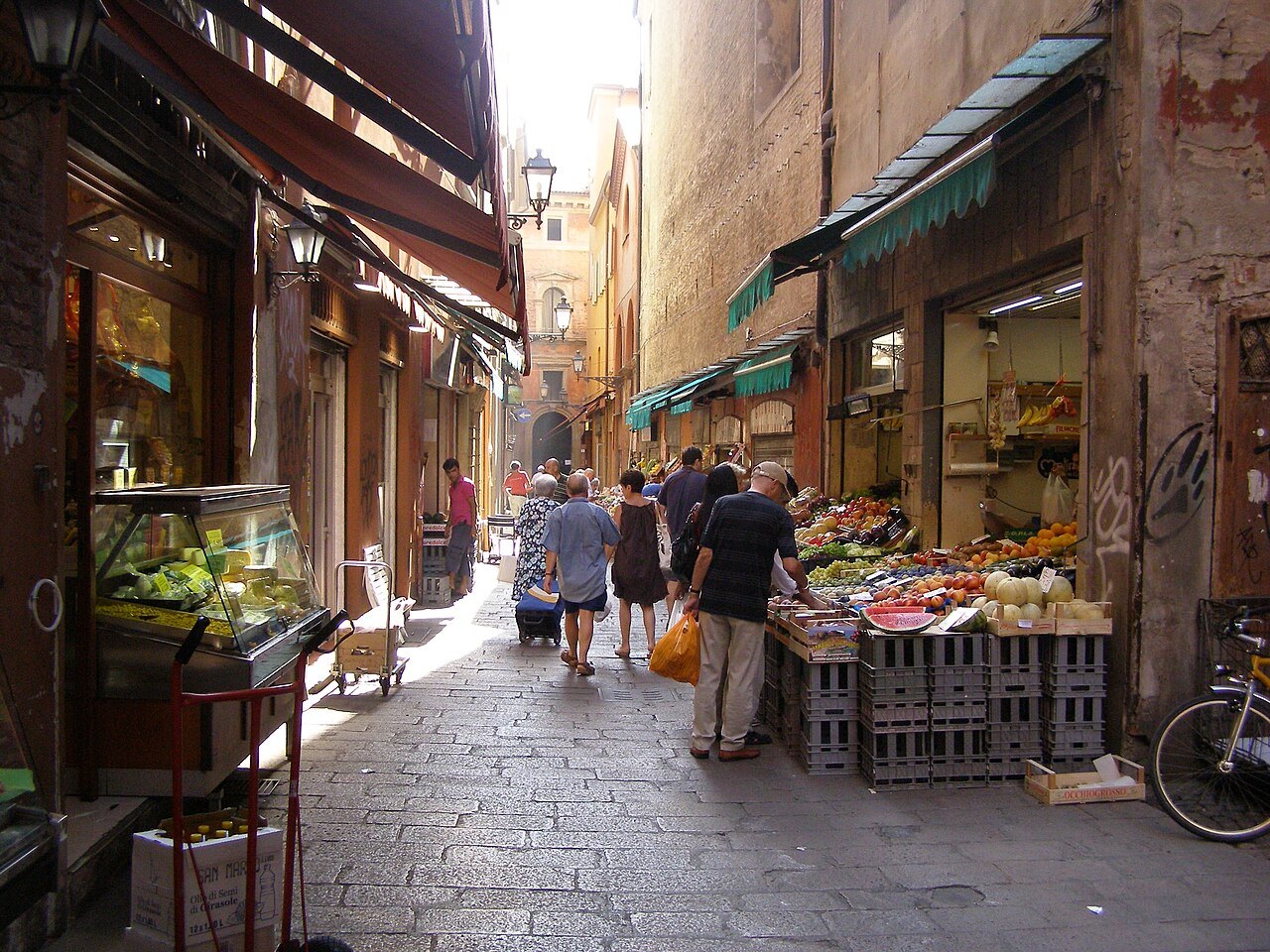
Bologna has been called la Grassa, the fat one, for centuries, and the easiest place to understand why is a block of narrow streets a few steps from Piazza Maggiore. The Quadrilatero has been the city's market since the Middle Ages, and unlike many old market quarters in Europe it has not turned into a souvenir street. It still sells food to people who live here, and it will happily feed you too.
What it will not do is explain itself. There are no menus on boards at the end of the lanes, no obvious way in, and a first-time visitor often walks through it, admires the hams in the doorways and leaves hungry. This piece is the missing explanation.
Find it behind the screen
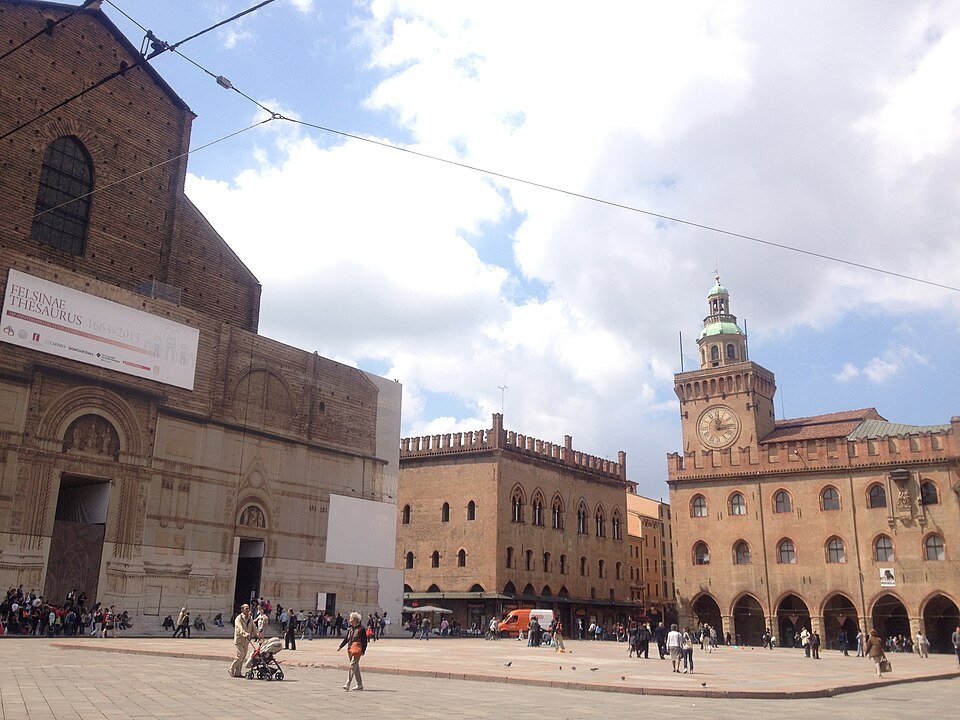
Stand in Piazza Maggiore and look east at the long arcaded front of the Palazzo dei Banchi. That regular sixteenth-century facade, designed by Vignola, is a screen. Walk through one of its arches and the medieval grid of lanes carries on behind it exactly as before.
The streets are named for the trades that worked them, and the names are still a rough guide. Via Pescherie Vecchie is the old fish market, and fishmongers still set out their stalls in it. Via Drapperie was the drapers' street, via Clavature the locksmiths', via Orefici the goldsmiths'. The trades have changed; the lanes are still defined by what they sell.
What you are looking at
Most of what Bologna cooks is on sale within a hundred meters. The shops fall into a few kinds, and knowing which is which is most of the battle.
The delicatessens are the ones with whole hams and great pink cylinders of mortadella hanging in the doorway. Mortadella — pork studded with cubes of fat and sliced paper-thin — is made in and around the city, and the English word "bologna" for lunch meat descends from it, distantly. These shops also sell Parmigiano cut from the wheel and the other cured meats of Emilia.
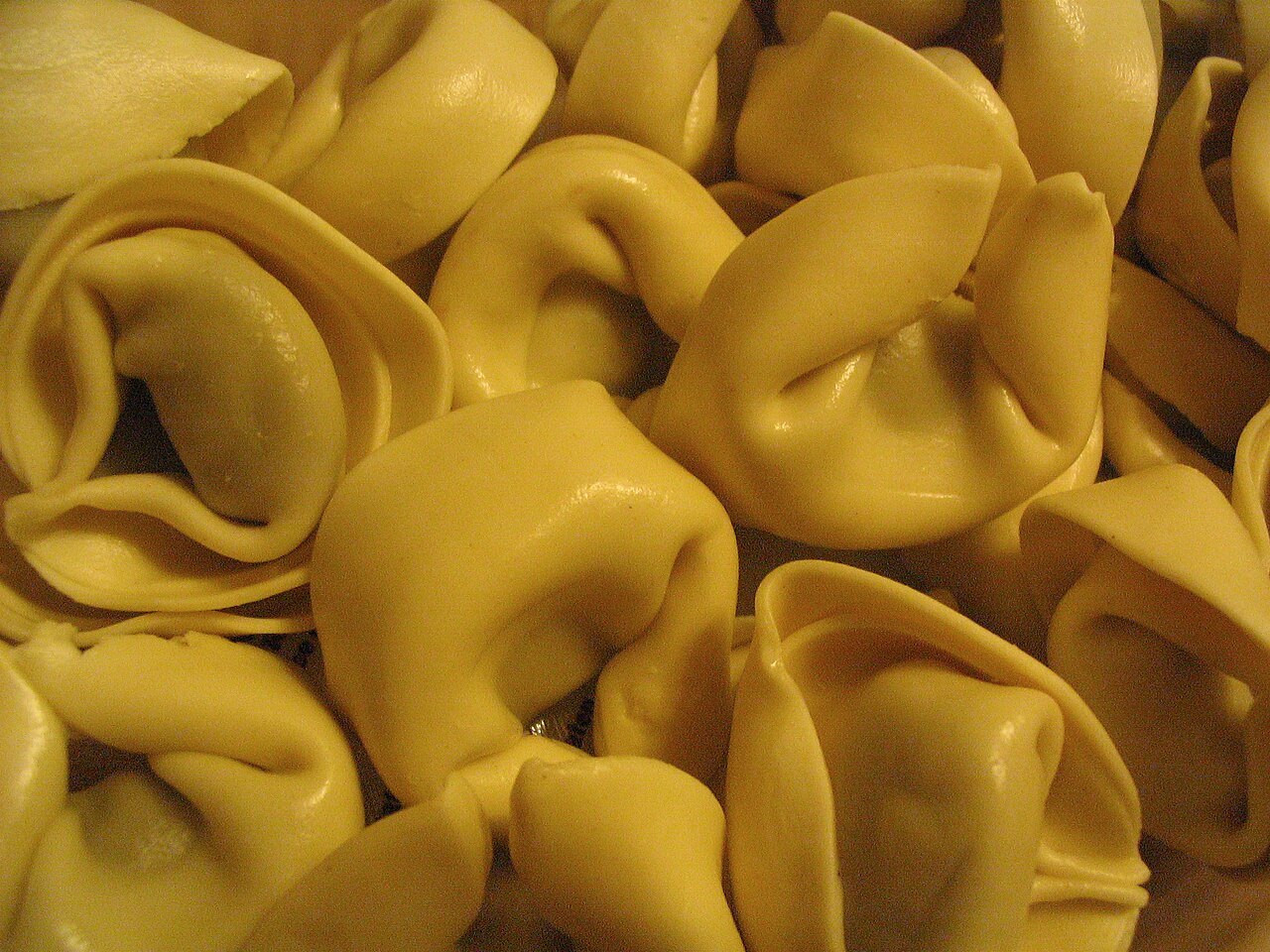
The fresh pasta shops make egg pasta by hand, often in the window: tortellini, tiny rings filled with pork, prosciutto, mortadella and Parmigiano; the green, ricotta-filled balanzoni; sheets for lasagne verdi. Watching it being made is part of the city's everyday life, not a show. See eating and drinking for what each dish is.
Then there are the greengrocers and fishmongers, the bakeries, and a growing number of places that sell all of the above and have set out a few tables to serve it.
How to eat there without a booking
The Quadrilatero's great virtue for a visitor is that you can eat well in it without reserving anything and without committing to a long meal.
The classic order is a board of cured meats and cheese — mortadella, prosciutto, salami, Parmigiano — with a glass of wine. In Bologna it often comes with crescentine, puffs of fried dough you split and fill with the meat and soft cheese. Many shops and wine bars in the lanes will serve exactly this at a counter or a small table, and it is a perfectly respectable lunch.
The local white wine to ask for is Pignoletto, from the hills just south of the city, often lightly sparkling. Lambrusco, the dark fizzy red from the plain around Modena and Reggio Emilia, is drunk here with salumi too.
In the early evening the same counters become the city's aperitivo: a glass of wine and something to eat before dinner, standing up in a crowded lane. It is the easiest first meal in Bologna, and the first-evening walk in this journal ends here for that reason.
Note This site does not recommend individual shops or restaurants. A guide written at a desk cannot tell you which counter is good this season; your own eyes can. Look for the places where people who clearly live here are standing.
The market under a roof
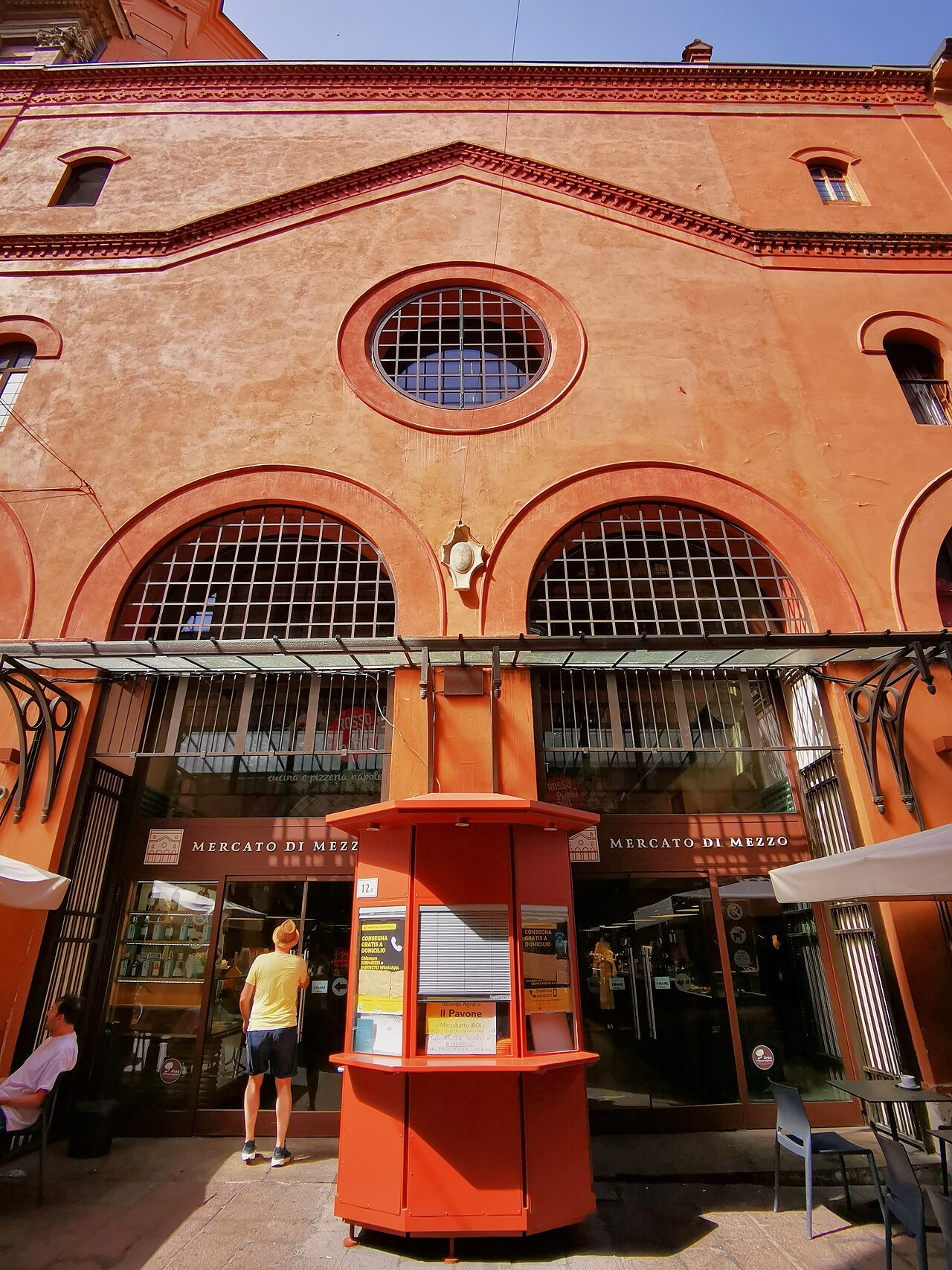
In the middle of the lanes, on via Clavature, stands the Mercato di Mezzo, the city's old covered market. After years of decline it was restored and reopened as a food hall, with stalls selling pasta, cheese, cured meats, pastries and wine, and places to sit and eat what you buy. It is less atmospheric than the open lanes and far more convenient on a wet day — see what a rainy day changes.
If you want a market that is still mostly a market, walk ten minutes west to the Mercato delle Erbe on via Ugo Bassi, rebuilt after the Second World War. Its stalls sell fruit, vegetables, meat, fish and cheese, and it too has added counters where you can eat.
When to go
Come in the morning to see the market working: the fish being laid out in via Pescherie Vecchie, the pasta being rolled, the grocers stacking crates. It is quieter, the light in the narrow lanes is better, and you can buy things to take away.
Note Lunchtime and the early evening are crowded. The lanes are narrow and fill quickly, and in the busiest weeks you may wait for a place at a counter. That crowd is part of the pleasure, but it is worth knowing if you would rather look than eat.
And remember August, when much of the city's own life stops for the summer holidays and some family-run shops close for a week or more. See when to come.
What not to look for
Note You will not find spaghetti bolognese on a counter here, and you will not find locals ordering it anywhere. The slow meat sauce the world calls "bolognese" is real, and it is Bologna's; but the city serves it on tagliatelle, wide ribbons of egg pasta, as tagliatelle al ragù. Ask for that instead.
A sculpture next to the salami
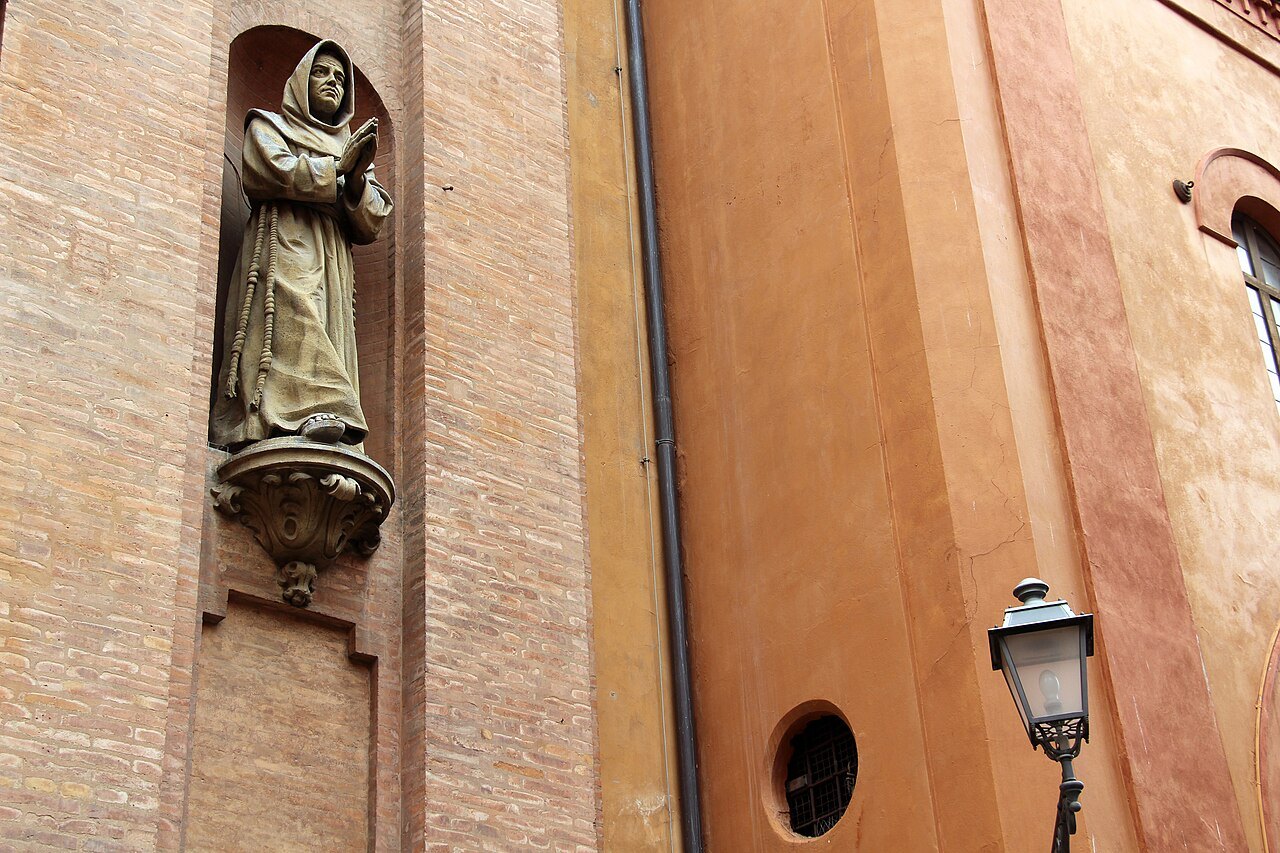
Before you leave, walk down via Clavature to Santa Maria della Vita. In a chapel inside is Niccolò dell'Arca's Compianto, seven life-size terracotta figures mourning the dead Christ, with Mary Magdalene frozen mid-scream. It is one of the most startling sculptures in Italy, a few steps from a cheese counter, and most people eating in the lanes never know it is there.
If you are still deciding where to base yourself for a trip built around food, see choosing between Bologna and Florence as a base.
 Spend your first evening in Bologna under the arcades
 A rainy day in Bologna hardly changes the plan
 Choosing between Bologna and Florence as a base changes what your days look like