The first evening in a new city is usually wasted. You arrive tired, you walk too far in the wrong direction, you eat somewhere near the station because it is there, and you go to bed without having understood anything. Bologna makes it unusually easy to do better, because its center is small and almost every street that matters is covered.
This is a walk for the day you arrive. It needs no ticket, no booking and no map beyond the first turn, it takes a relaxed couple of hours with stops, and by the end of it you will know where everything in this guide is. Start wherever you are staying; everything below begins in Piazza Maggiore.
Begin in the room in the middle of the city
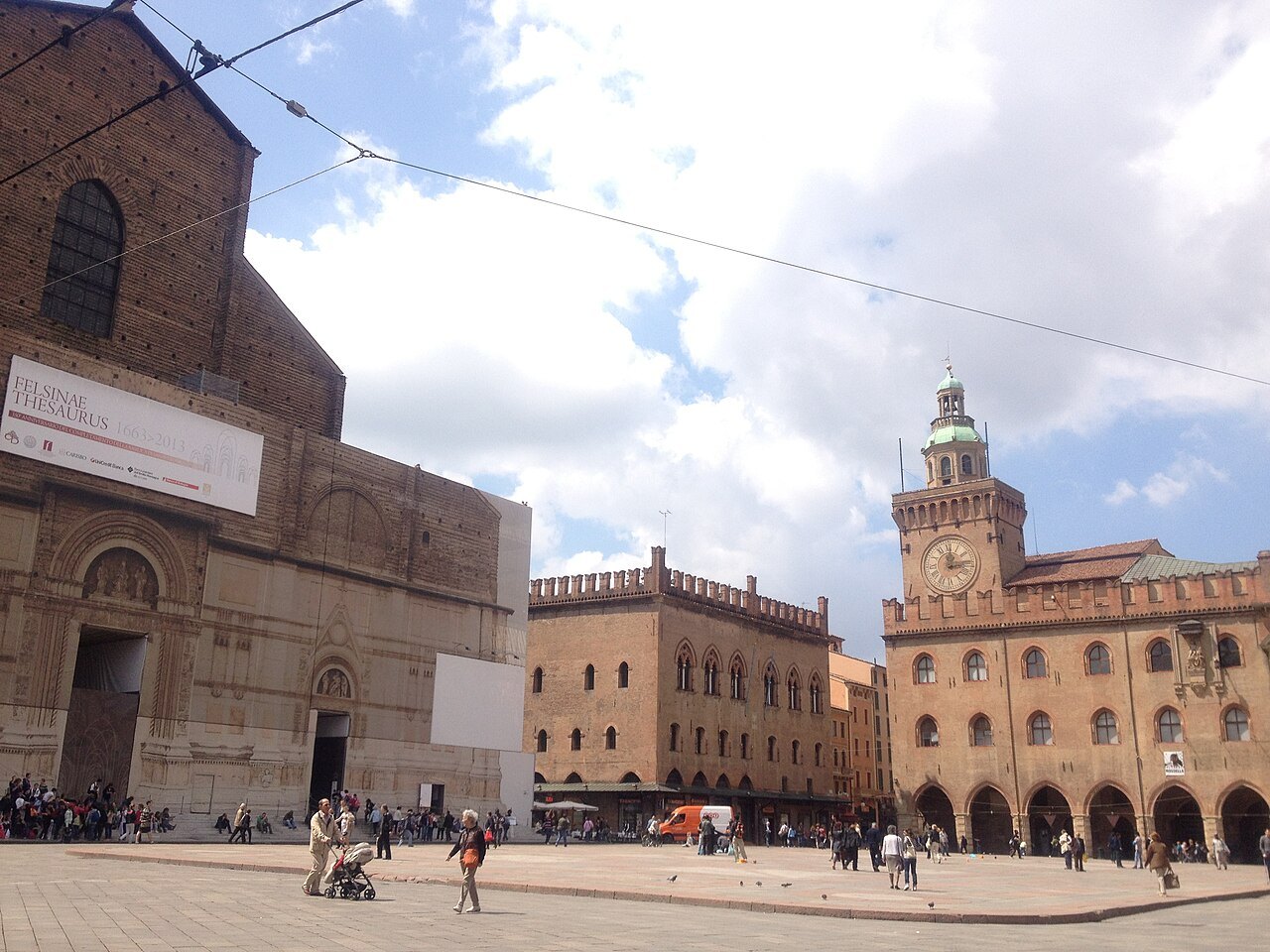
Piazza Maggiore behaves like a room, and it is the right place to get your bearings. Stand in the middle and turn slowly. To the south is San Petronio, the enormous basilica with half a marble facade — begun in 1390 and never finished, which is why the top half is bare brick. To the west is Palazzo d'Accursio, the town hall. To the north is the Palazzo del Podestà, and to the east the long arcaded front of the Palazzo dei Banchi.
Before you move on, find the corner under the Palazzo del Podestà where two passages cross beneath a high vault. Stand facing one corner pillar and speak quietly into it; someone at the diagonally opposite corner hears you clearly. There is often a small queue of people trying it, and it is the most cheerful introduction to the city you could ask for.
Then sit for a few minutes on the edge of the Crescentone, the raised stone platform in the middle of the square. Its edge is the city's bench, and watching Bologna cross the square at the end of the working day tells you more about the place than any museum.
Past the Giant, toward the towers
Walk to the Neptune fountain in the square next door. The Bolognese call the bronze statue il Gigante, the Giant; it was made in the 1560s by the Flemish sculptor Giambologna, and it was cleaned back to bronze in a restoration in the late 2010s.
From the fountain, turn east along via Rizzoli. This is one of the three streets of the "T" at the heart of the city — via Rizzoli, via Ugo Bassi and via dell'Indipendenza — which are closed to private cars and, at weekends and on holidays, handed over entirely to people on foot. Ahead of you the two towers close the end of the street, and the view gets better with every step.
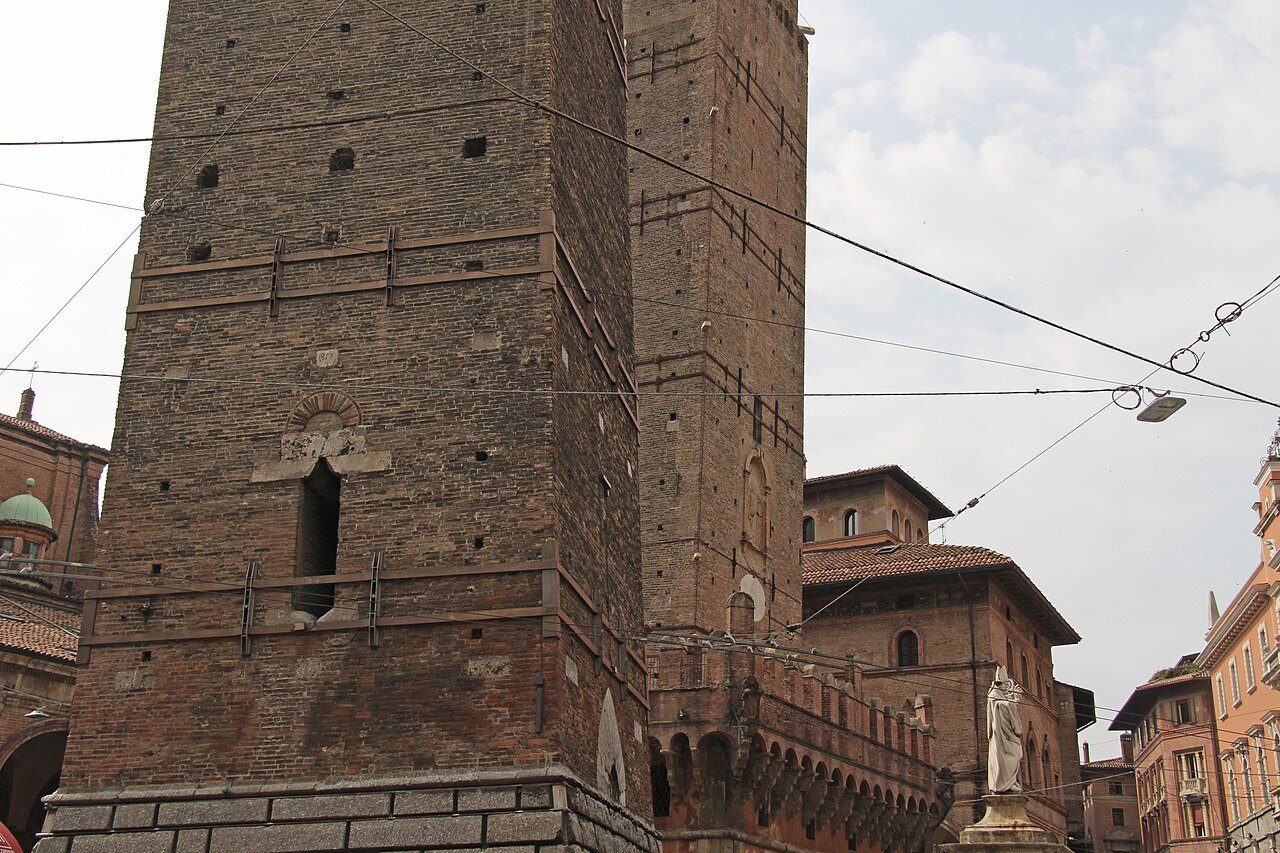
When you reach them, stand at the foot of the Asinelli and look straight up. The shorter Garisenda leans visibly beside it. Whether you will be able to climb the taller tower during your stay is a separate question — see where to see Bologna from above — but the view from below is always open.
Under the Portico dei Servi
At the towers, several streets fan out. Take Strada Maggiore, heading south-east, and walk under its porticoes. A few steps along it you pass the tall timber porch of Casa Isolani, one of the few surviving medieval wooden porticoes in the city.
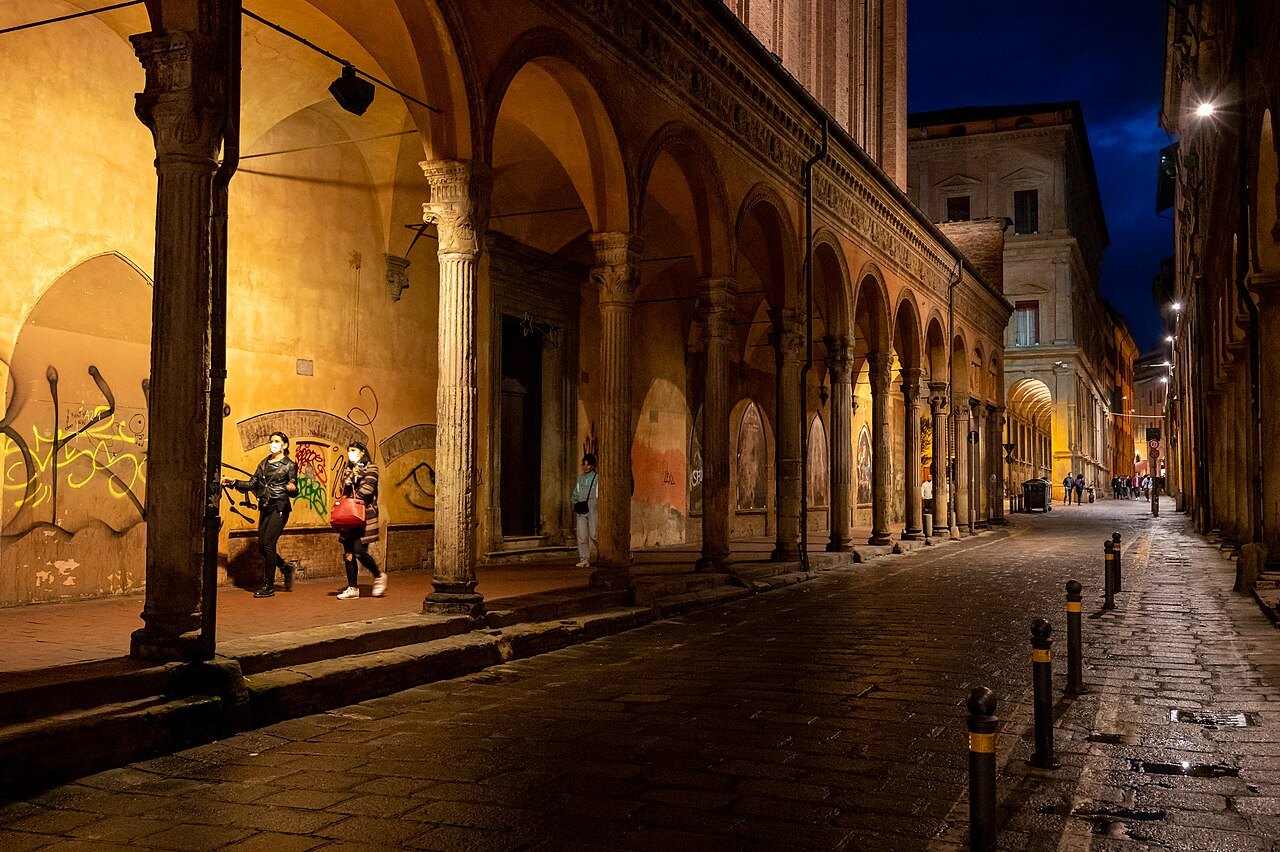
Further on, the portico of the church of Santa Maria dei Servi opens out into one of the grandest arcades in Bologna. This is the moment to notice what the porticoes are doing: you have walked a good distance through the center without once stepping into the open, and you could have done it in a downpour. The city has about 62 kilometers of them, and they have been on the UNESCO World Heritage list since 2021.
The calm square
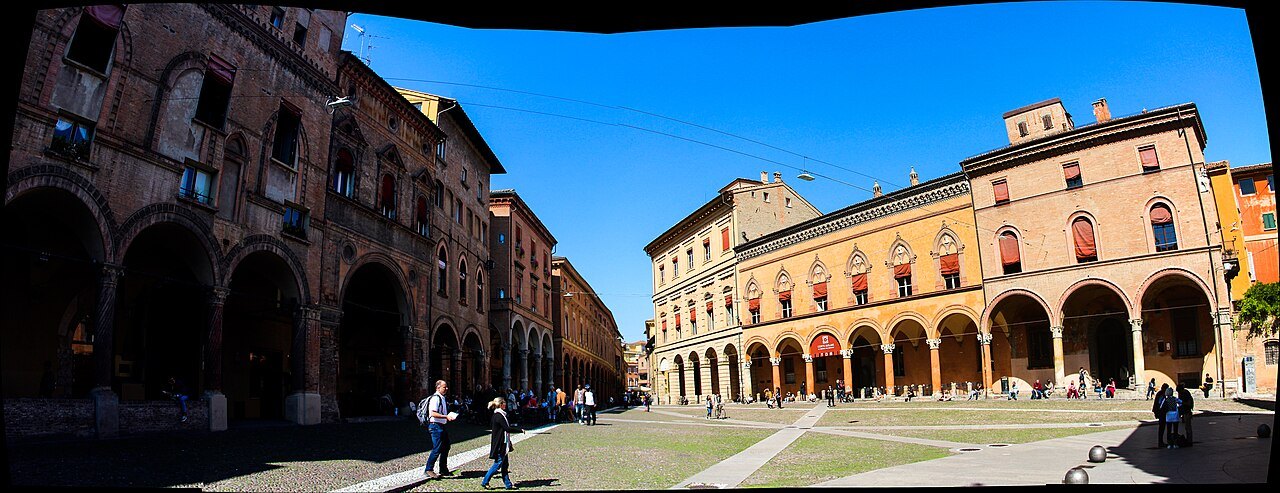
From Strada Maggiore, cut across to Piazza Santo Stefano, a long cobbled triangle lined with palaces and porticoes, closed at its narrow end by the brick churches of the Sette Chiese. After the noise of via Rizzoli it feels almost silent, and on a quiet evening it is one of the most beautiful public spaces in Italy.
Note The churches themselves are in use and close for services and at the end of the day, so treat this as a look from the outside and come back another morning to walk through them. The square is the point tonight.
Back through the market lanes
From Santo Stefano, head back toward Piazza Maggiore through the narrow streets behind the Palazzo dei Banchi. This is the Quadrilatero, the medieval market, and in the early evening it changes character: the grocers and fishmongers close up and the delicatessens and wine bars fill, with people standing at counters and at small tables set out in the lanes.
This is where most Bolognese would tell you to stop for an aperitivo — a glass of wine and something to eat before dinner — and it is the easiest first meal in the city because it needs no booking. How the Quadrilatero works explains what to order and how.
If you still have energy
Two evening streets are worth knowing about, and they suit different moods. Via del Pratello, west of the center, is a local street of small bars. Piazza Verdi, at the heart of the university quarter on via Zamboni, is loud, young and busy until late — a good place to see la Dotta at its liveliest, and a place to avoid if you are choosing a quiet room.
Note In summer, an outdoor film festival fills Piazza Maggiore with a screen and rows of seats, so the square you walked through at the start may look quite different by the time you return to it. It is one of the best things the city does, and it is free to wander past.
What you have learned
By the end of this walk you have seen the square, the fountain, the towers, the grandest arcade, the calmest piazza and the market, and you have done it without a ticket or a map. More usefully, you have walked two of the covered axes that organize the whole center. Tomorrow, when you set out for a particular sight, you will know which way it is.
If you are arriving with luggage and wondering what to do with it before any of this, see what to do with your luggage between the train and the hotel. For the days that follow, the itineraries pick up where this walk leaves off.
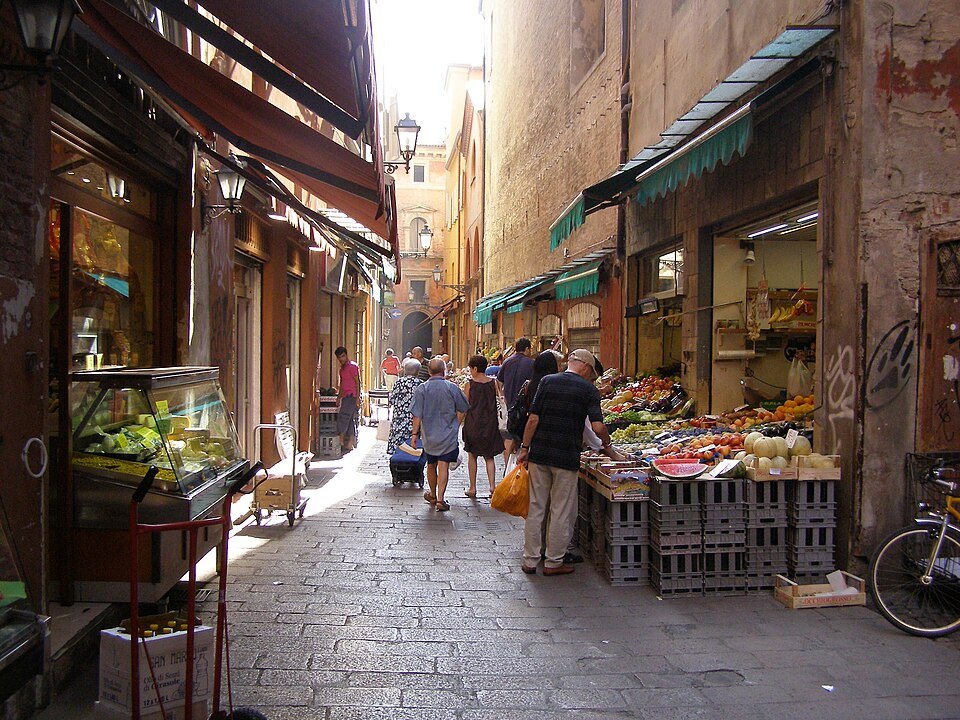 How the Quadrilatero works when you want to eat standing up
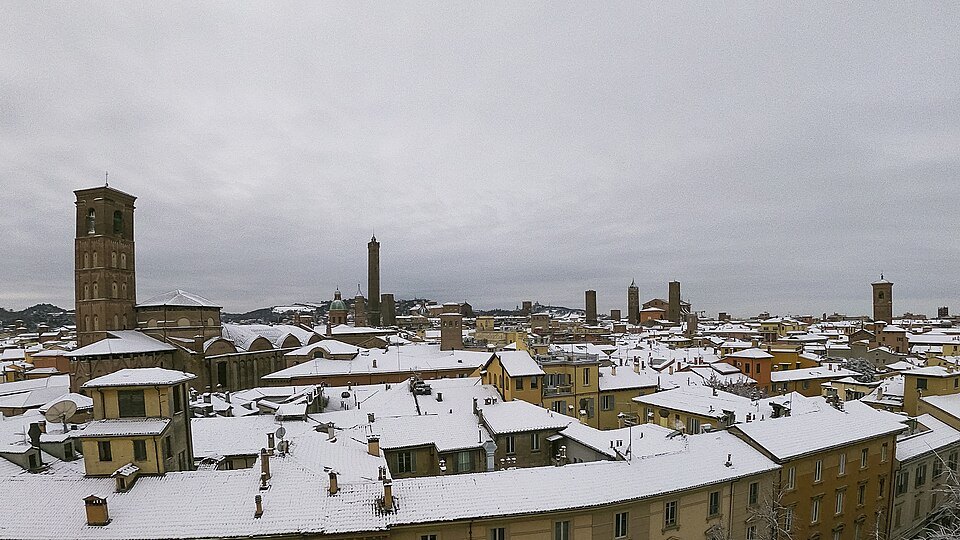 Where to see Bologna from above when you cannot climb the tower
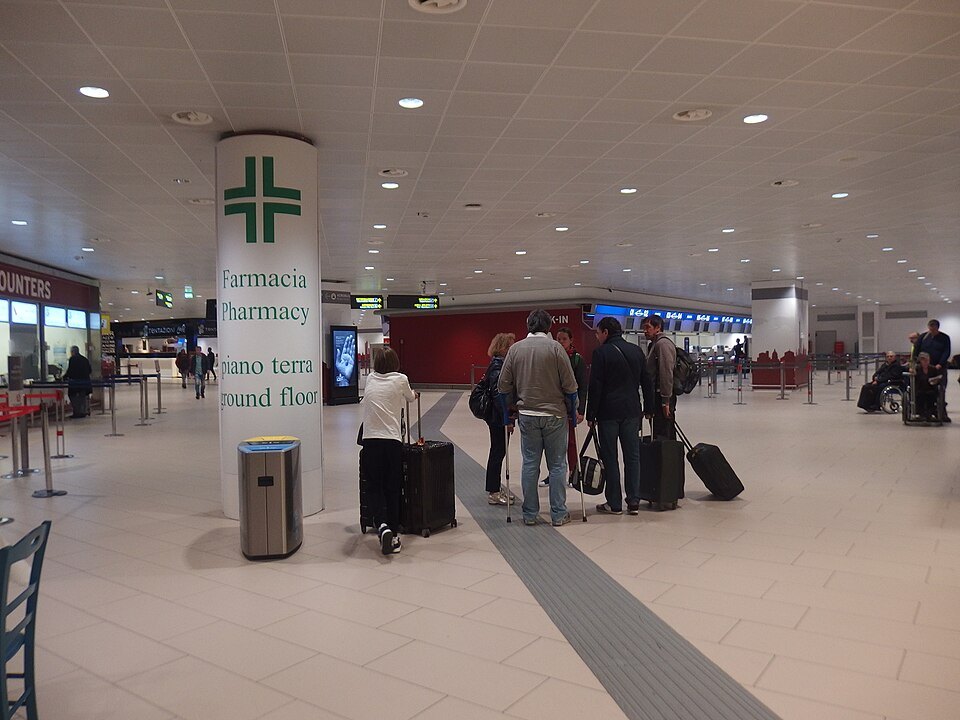 What to do with your luggage between the train and the hotel