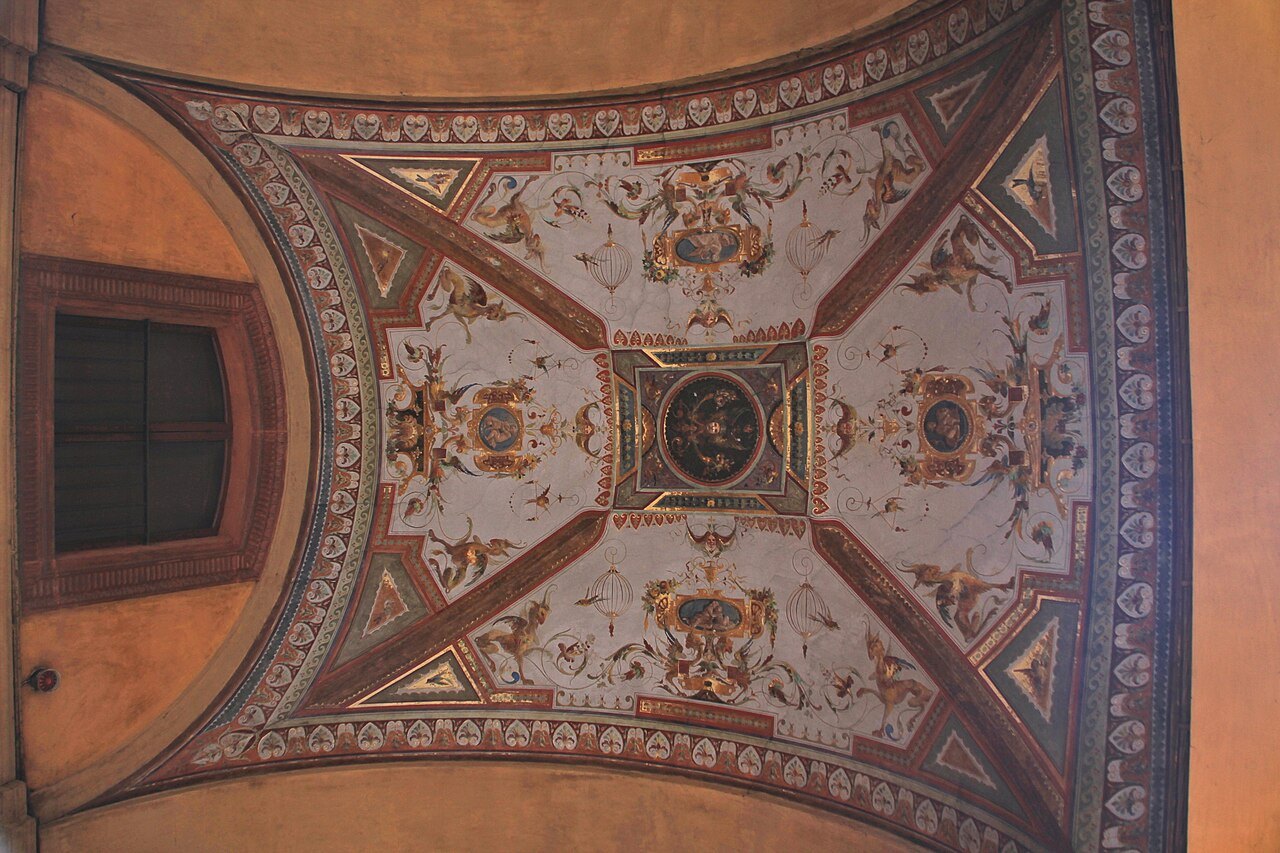
In most Italian cities, a day of steady rain is a day lost. You shelter in a café, you queue for whichever museum everyone else has also chosen, and you wait for it to stop. Bologna is different, for a reason you will notice within an hour of arriving: almost every street in the center has a roof.
The city has about 62 kilometers of porticoes, and they were not built for beauty. As the university drew students in the Middle Ages, owners built out over the street to gain room, and the commune turned the habit into law, requiring porticoes on new houses and keeping the ground under them open to everyone. The result, eight centuries later, is a city you can cross in a downpour without an umbrella.
Walk the covered axes first
The best use of a wet morning is to do exactly what you would have done on a dry one: walk. Learn the main covered streets and the city falls into place.
Via dell'Indipendenza runs under porticoes from the station to the center. Via Farini and via Santo Stefano carry some of the most elegant arcades in Bologna, painted and vaulted. Strada Maggiore leads east past the tall timber porch of Casa Isolani to the great Portico dei Servi. Getting around describes the whole network.
Rain is also the best time to look up. Under the grander porticoes the vaults are painted, coffered or decorated, and on a bright day you walk under them without noticing. On a grey one, when you are in no hurry to leave their shelter, you see them.
The anatomy theater and the arcade outside it
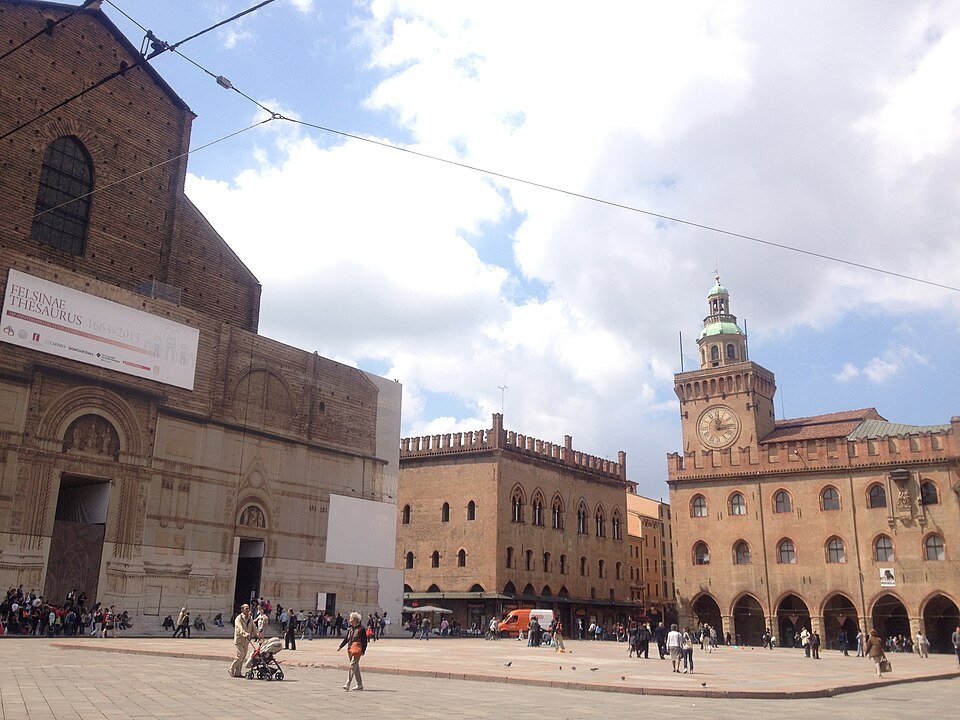
Start with the Archiginnasio, which runs along the side of San Petronio behind the long portico called the Pavaglione. It was built in the 1560s to gather the university's schools under one roof, and its courtyard and loggias are covered with thousands of painted and carved coats of arms left by students and teachers from all over Europe.
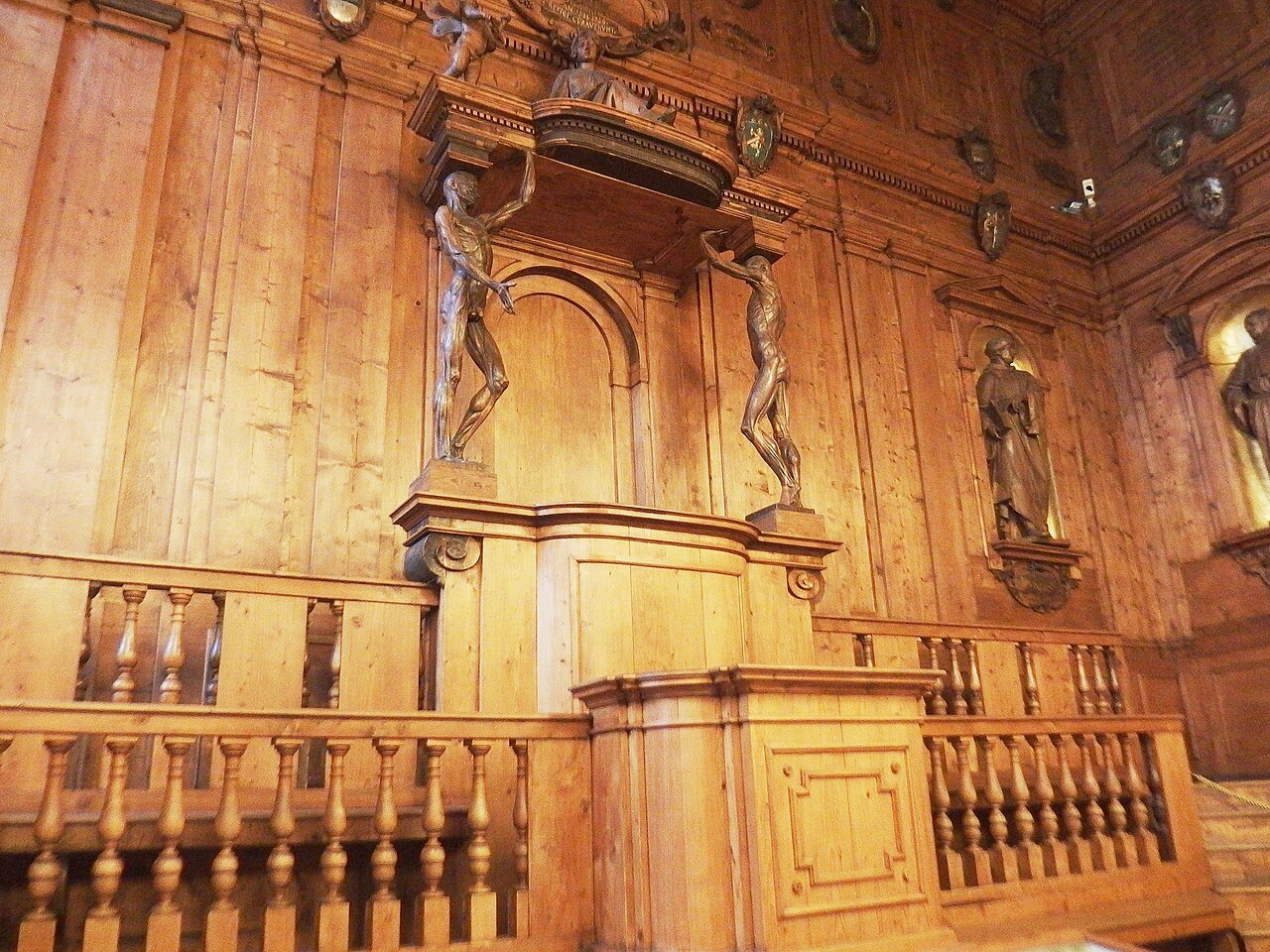
Upstairs is the anatomical theater, a room lined entirely in carved spruce, with tiered seats around a marble table where bodies were dissected for students. Much of what you see was rebuilt after bombing in 1944 using the carvings recovered from the rubble. It is a working library, so access to the historic rooms follows the library's own rules — check with the library before you build a day around it.
A sculpture that is better with no sun
A few steps away, on via Clavature in the Quadrilatero, is Santa Maria della Vita. In a chapel to one side stands Niccolò dell'Arca's Compianto sul Cristo morto: seven life-size terracotta figures mourning the dead Christ, made in the second half of the fifteenth century. Mary Magdalene rushes in with her clothes streaming behind her and her mouth open in a scream.
It is one of the most emotional sculptures of the Italian Renaissance, and a dim, rainy day suits it. There is no glare, fewer people are passing, and the figures seem to move in the half-light.
The picture gallery that is rarely crowded
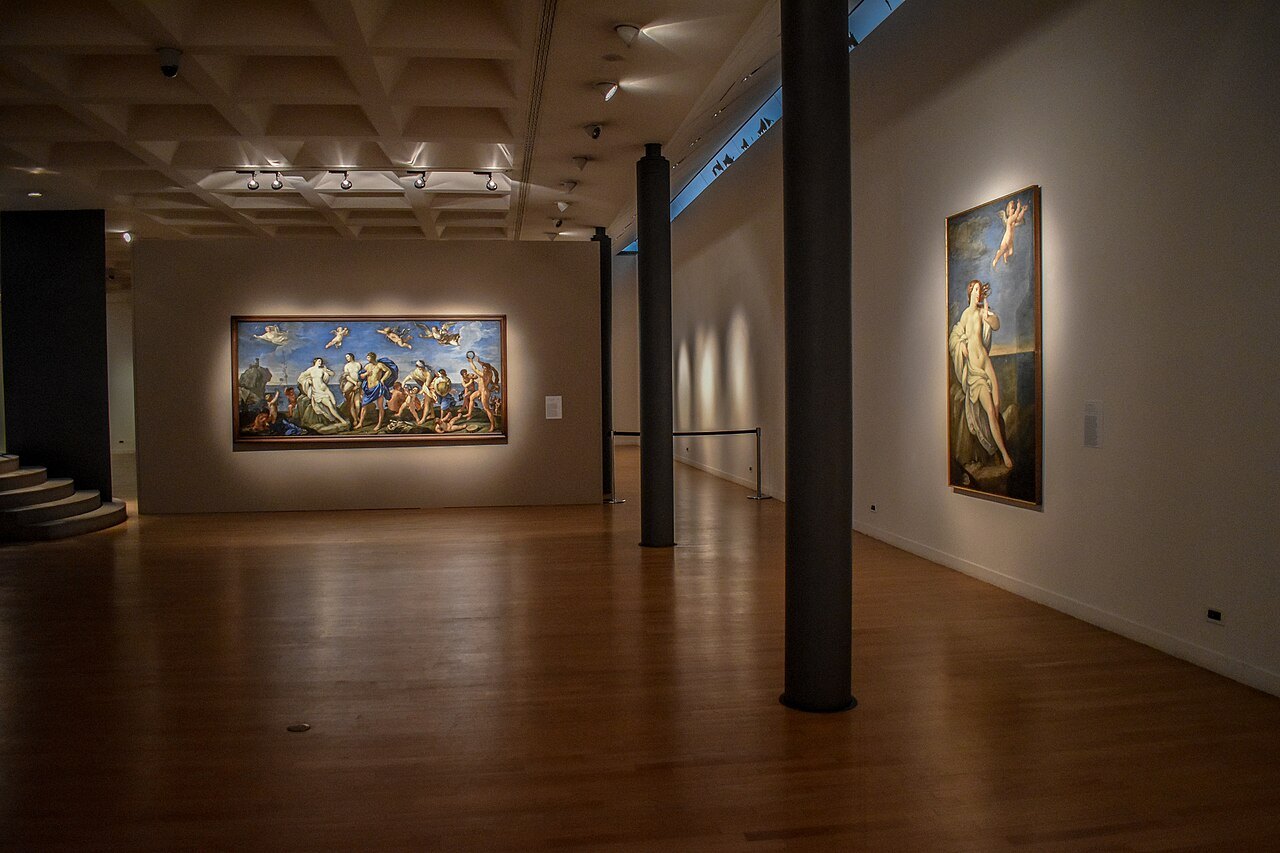
The Pinacoteca Nazionale, in the university quarter on via delle Belle Arti, is the natural center of a wet afternoon. Its collection is mostly what Bologna itself commissioned over six centuries: early rooms with a polyptych by Giotto and work by Vitale da Bologna, then the Carracci, Guido Reni and Guercino, and Raphael's Ecstasy of Saint Cecilia, painted for a church in the city.
Note Italian state museums close one day a week and sometimes rearrange rooms. Check the gallery's own page before you walk there in the rain.
Around the corner on via Zamboni, the museum of Palazzo Poggi holds the collections of the eighteenth-century Institute of Sciences — maps, globes, ship models, instruments — under ceilings frescoed with scenes from the Odyssey. Some of its anatomical wax models are very frank; know that before you bring children.
A library over a buried city
Part of the town hall complex on Piazza Maggiore is the Salaborsa, a former exchange hall that is now the city's public library. Its floor is partly glass, and under your feet are excavated remains of Roman and medieval Bologna. It is a warm, dry, free place to spend half an hour, and it is covered on the Palazzo d'Accursio page.
What rain does take away
Be honest with yourself about the few things a wet day genuinely spoils.
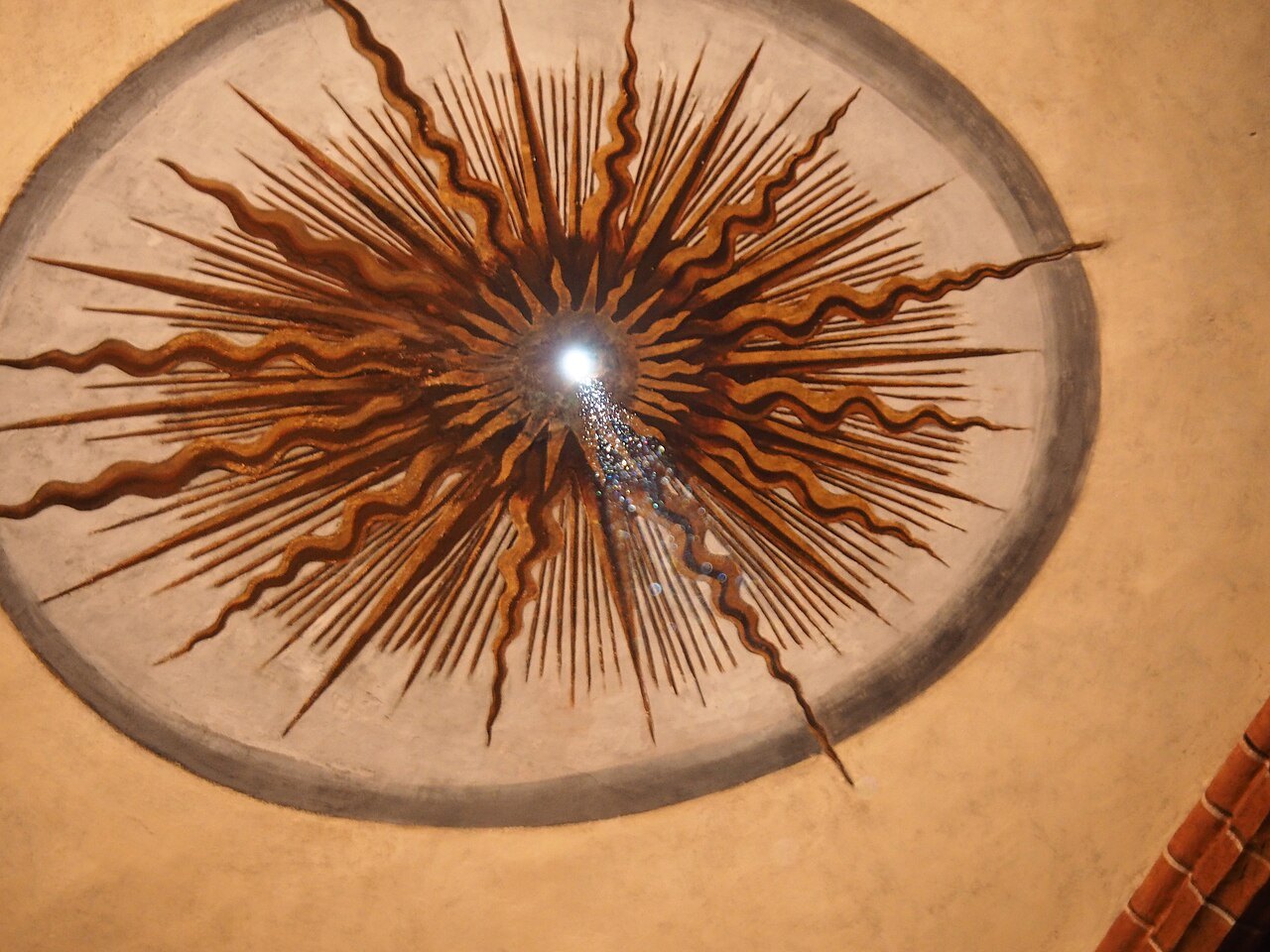
Note The long brass meridian line in San Petronio, laid out by the astronomer Giovanni Domenico Cassini in 1655, works by letting a disc of sunlight fall through a hole in the vault onto the floor at local noon. With no sun there is no disc. The basilica is still worth entering — it is vast and dry — but save the meridian for a bright day.
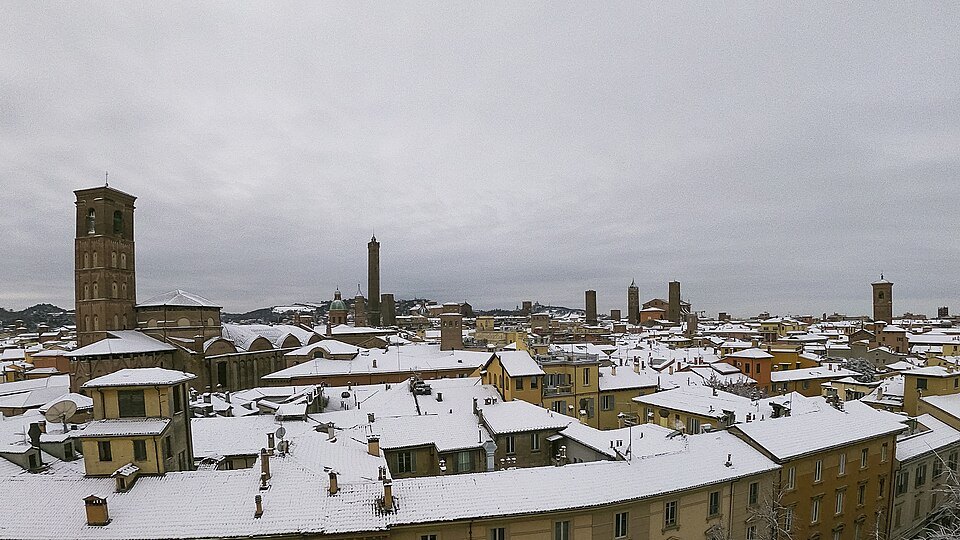
The view from above is the other casualty. Low cloud and fog, which the Po plain produces generously in winter, can hide the city from any height. See where to see Bologna from above for the options when the weather clears.
And one thing rain barely touches at all: the walk to San Luca. The sanctuary on its hill is reached under nearly four kilometers of continuous portico, built precisely so that people could make the climb in any weather. Wear shoes that can manage wet steps and it is one of the best rainy-day walks in Italy.
Eat in the middle of the day
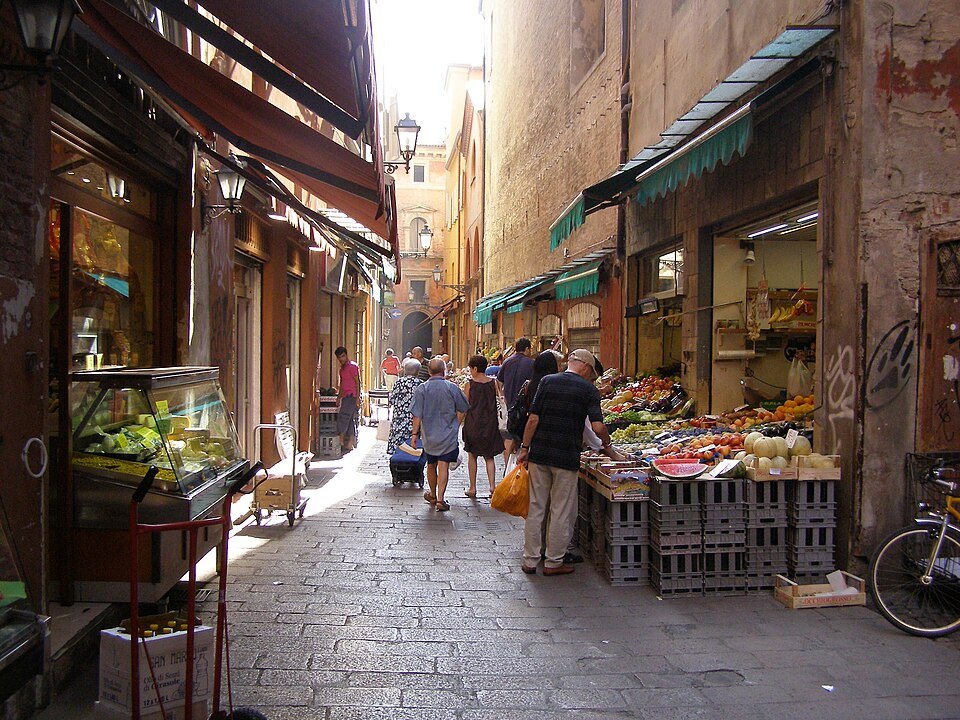
Finish, or break, the day in the market lanes. The covered Mercato di Mezzo on via Clavature and the stalls of the Quadrilatero around it are made for a long, dry lunch, and how the Quadrilatero works explains how to eat there without a booking.
By evening the rain will probably still be falling. It will not matter much. The first-evening walk in this journal is covered almost from end to end.
 Spend your first evening in Bologna under the arcades
 Where to see Bologna from above when you cannot climb the tower
 How the Quadrilatero works when you want to eat standing up