
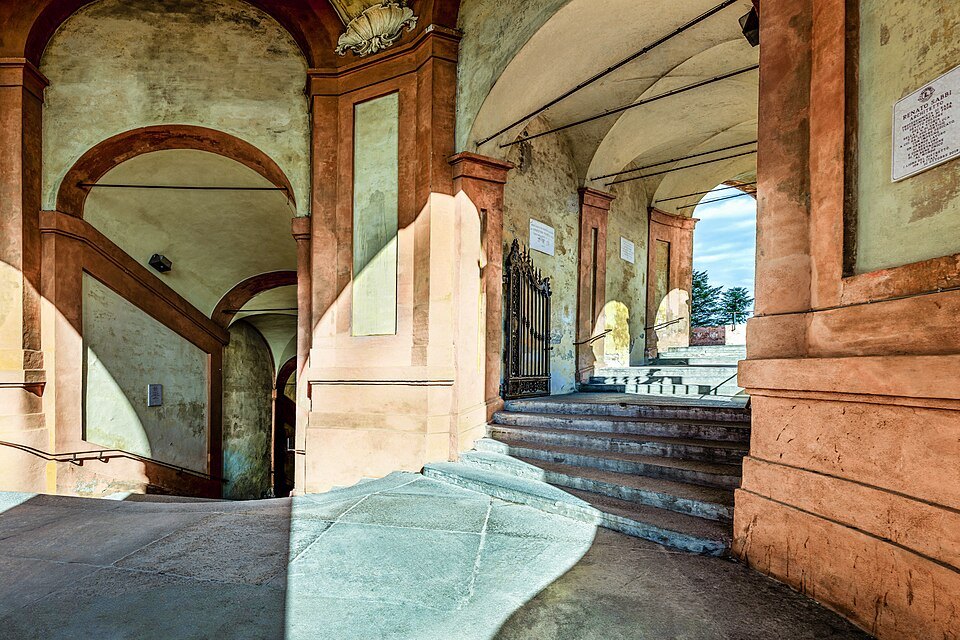
For most of the year, the icon of the Madonna di San Luca stays exactly where you'd expect to find it: inside the basilica on its hill above the city, reached by the longest portico in the world. But once a year, tradition turns that arrangement upside down. The painting is taken from the sanctuary, carried down through the arcades on the shoulders of volunteers, and brought into the historic center, where it stays for about a week before making the same journey in reverse. If you happen to be in Bologna while this is happening, you'll notice it everywhere — in the decorated streets, the gathered crowds, and the general sense that the city has quietly rearranged itself around a procession that has been repeating, in one form or another, for centuries.
Why the icon comes down at all
The custom dates back to a moment of civic crisis long ago, when the image was brought into Bologna in the hope of ending a period of hardship, and the relief that followed turned a one-off gesture into an annual rite. Since then, the descent has happened with enough regularity that it now functions as an unofficial marker of the spring calendar, the way certain processions elsewhere mark the turning of a season. The exact date shifts from year to year because it is tied to a moveable point on the liturgical calendar, so if the timing matters to your trip, check with the basilica or a local parish calendar before you plan around it — see when to come for how this fits into the wider rhythm of the Bologna year.
What stays constant is the route: down the hill, under the full length of the portico, across the edge of the center, and into the cathedral, where the icon remains on display for the duration of its stay before the return climb. The physical path is the same one described in detail on the San Luca page, and anyone curious about walking it themselves, procession or not, will find a slower, more practical version of that walk in this guide to climbing without wearing yourself out.
What actually changes in the city
The most visible shift is along the portico itself. For the days bracketing the procession, stretches of the arcade fill with people — some devout, some simply curious, many of them residents who treat the event as a reason to be outside. Barriers and stewarding appear along sections of the route, and certain streets near the final approach to the center may see altered traffic patterns for the hours the procession actually passes. None of this is dramatic by the standards of a major city, but it is enough that a visitor arriving without warning might wonder why a normally quiet corner of town is suddenly full of folding chairs and a brass band tuning up.
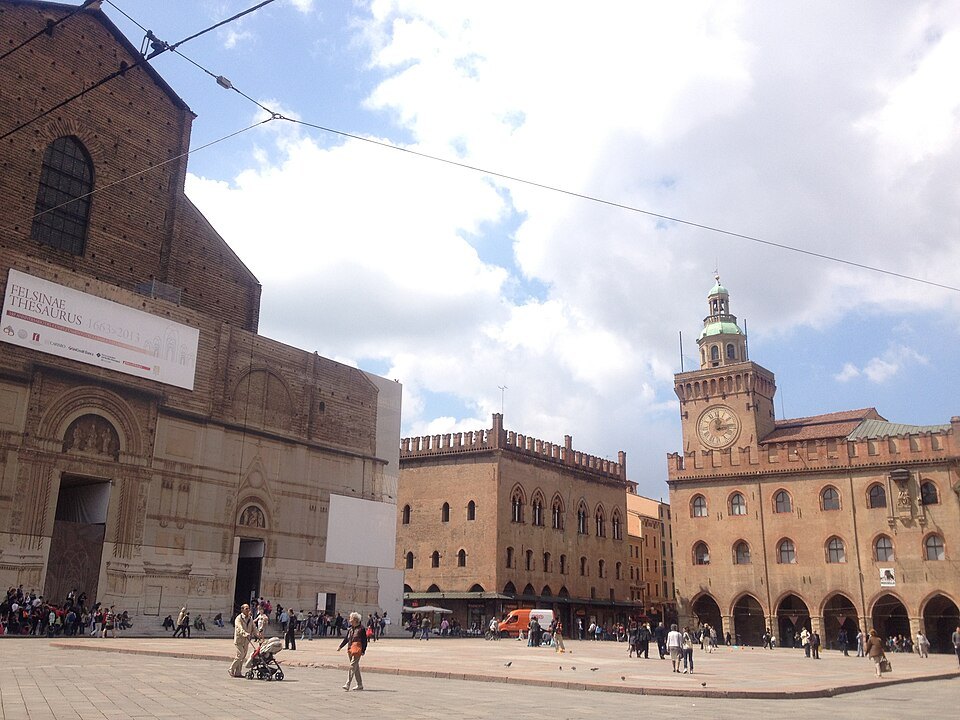
Inside the historic core, the effect is calmer. The icon's temporary home inside the cathedral draws a steady trickle of visitors rather than a single overwhelming crowd, and the surrounding streets go on more or less as usual. If your plans take you through Piazza Maggiore during this period, you may simply notice extra activity near the cathedral entrance, plus posters and local news coverage explaining the schedule in more detail than any general guide can responsibly give.
If you want to watch part of the procession without fighting for a spot in the city center, the portico itself is the better vantage point. Much of its length runs through quieter residential stretches where you can simply pick an arcade, stand to one side, and let the procession come to you.

Getting around while it's happening
Because the route follows the portico rather than the main road network, the disruption to ordinary movement around Bologna is smaller than you might expect. Buses serving the hill may adjust their stops or timing on the day itself, so if you're relying on public transport to reach the area, build in some slack and check current notices rather than assuming a normal schedule — the general principles on getting around still apply, just with an extra layer of caution for that one day.
Note Avoid planning a tight connection — a train to catch, a tour with a fixed meeting point — that depends on crossing the procession route right as it passes. The crowd moves slowly and stewards will hold pedestrians back at crossing points until the icon and its escort have gone by. It rarely takes long, but it's not something you can hurry.
If you're simply passing through the center on an ordinary errand, you likely won't need to change your plans at all. The disruption is concentrated along a fairly narrow corridor and around the cathedral itself, not spread across the whole city.
Experiencing it as a visitor, not a participant
You don't need any particular background to watch the procession pass, and no one will expect a tourist to understand every element of what they're seeing. It's entirely reasonable to treat it the way you might treat any other local tradition that happens to coincide with your visit: with curiosity, a respectful distance, and no obligation to linger longer than it holds your interest. Many visitors end up watching a short stretch of the procession near the portico, then carrying on with the rest of their day — a coffee, a walk through the arcades, an evening spent the way any first night in Bologna tends to go, which is to say mostly outdoors under cover. If that's the kind of evening you're picturing, this piece on spending your first evening under the arcades covers the mood well, procession or no procession.
Weather rarely changes much either way. Bologna's portico network exists precisely because the city has spent centuries managing rain without canceling anything, and the procession itself tends to proceed regardless of a passing shower. If your own trip coincides with a wet forecast, the reassurance in a rainy day in Bologna hardly changes the plan applies just as well on procession days as on ordinary ones.
For a visitor, the descent of the Madonna di San Luca is less an event to attend than a mood to notice — a week when a hilltop sanctuary and a city center briefly trade places, and the portico in between does the quiet work of connecting them, exactly as it was built to do.
 How to walk up to San Luca without wearing yourself out
 Spend your first evening in Bologna under the arcades
 A rainy day in Bologna hardly changes the plan