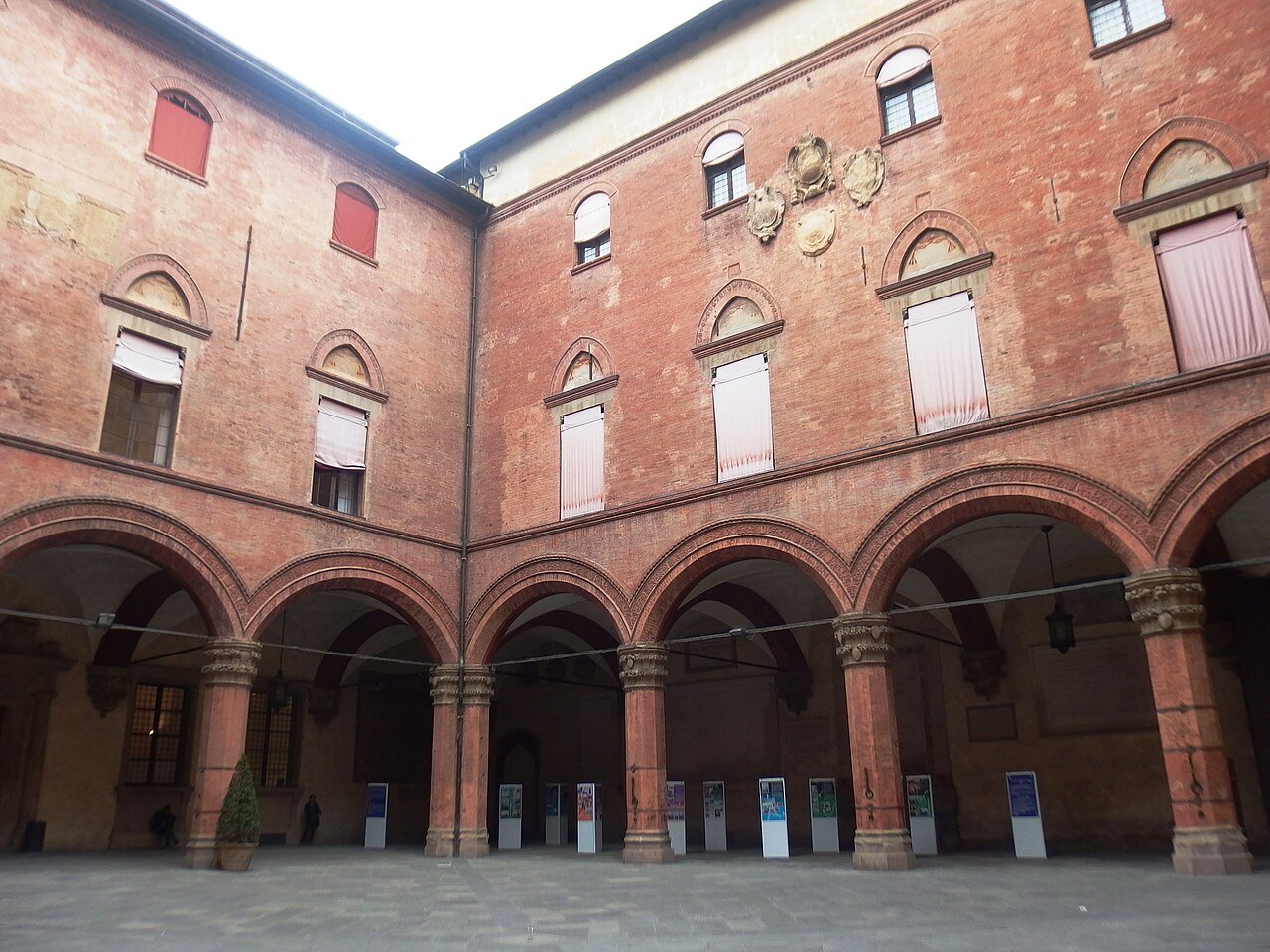
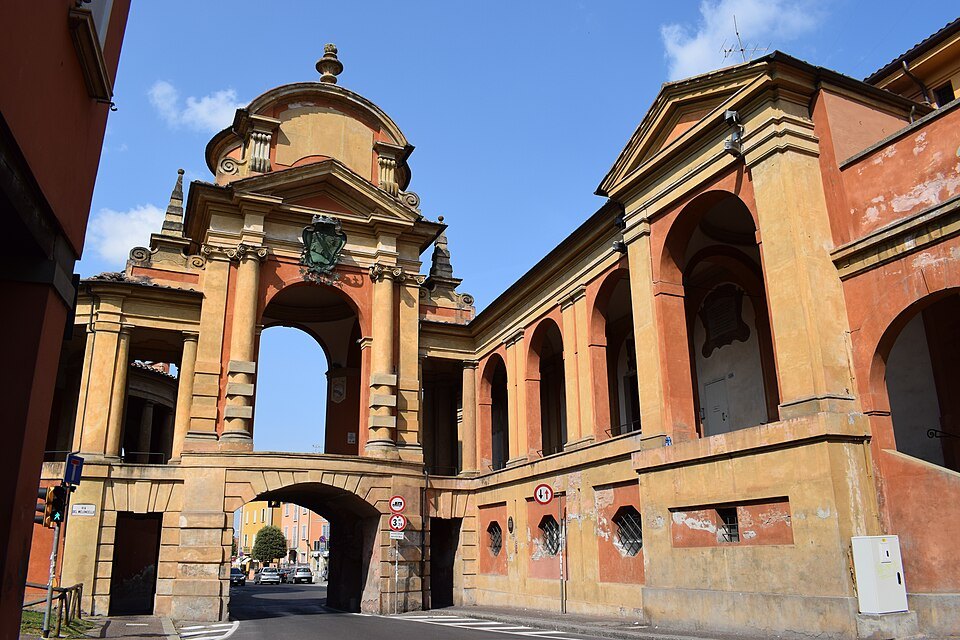
Stand in the right corner under the arch known as the Voltone del Podestà, face the stone, and say something quietly. Someone standing in the diagonally opposite corner, also facing the wall, will hear you as clearly as if you were standing next to them, even with a crowd of tourists and a few pigeons between you. It is one of the simplest, strangest free experiences in Piazza Maggiore, and most visitors walk straight through the arch without ever noticing it is there.
What the Voltone del Podestà actually is
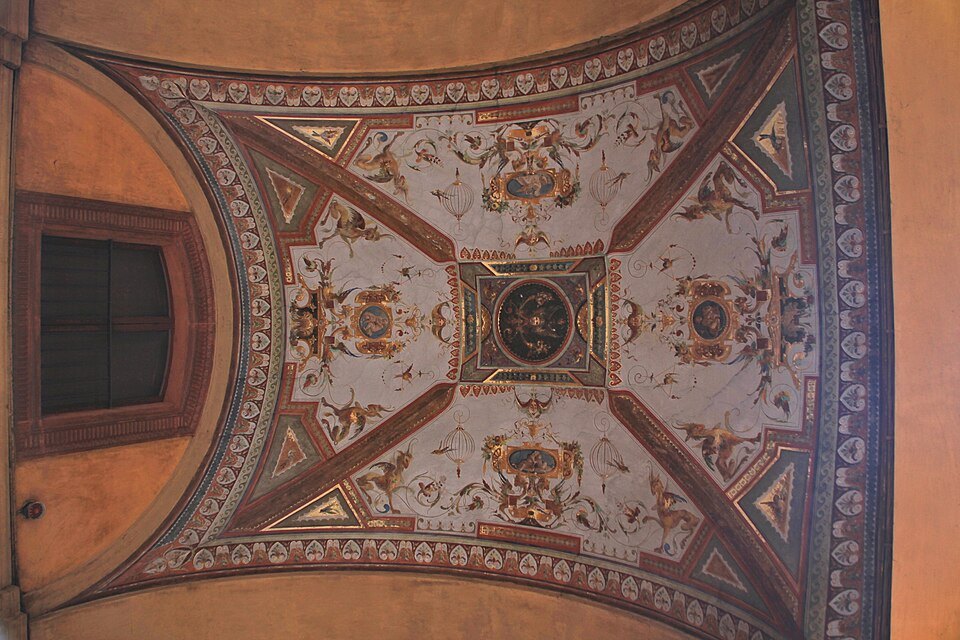
The Palazzo del Podestà sits on the western side of the square, raised on a loggia of arches, with a wide passageway cutting straight through the ground floor so that people can walk from Piazza Maggiore into Piazza del Nettuno without going around the building. This passage, the Voltone, is covered by a cross vault, and it is the meeting point of two intersecting arches that forms the acoustic quirk. The four corners at the base of the vault are the whispering points. It has nothing to do with any hidden mechanism, wiring, or modern installation; the effect comes entirely from the shape of fifteenth-century stonework, and it has presumably been startling people for as long as the vault has stood.
The building itself is worth a slower look beyond its party trick. It anchors one corner of the square alongside Palazzo d'Accursio, and together with the civic tower above it, forms part of the medieval government complex that once ran the city from this exact spot. If you are interested in how Bologna's public buildings connect to its street life, the Voltone is a good small case study: a passage built for pedestrians, under a palace built for power, that still works exactly as intended.
How the whisper actually travels
The physics is straightforward once you see it laid out. A cross vault is formed by two curved surfaces intersecting at right angles, and the curve of the stone acts a little like a satellite dish or a whispering gallery dome: sound that strikes the surface at a low angle gets reflected along the curve rather than scattering outward into the open air. Speak quietly into the corner, with your mouth close to the stone, and the sound follows the vault's ribs across the passage to the opposite corner, arriving with surprisingly little loss. Speak normally into open space instead of the corner, and the effect disappears, swallowed by the acoustics of a wide, busy passage.
This is why it works best as a two-person exercise rather than a solo curiosity. One person needs to be positioned in each of two diagonally opposite corners, both facing the stone, both speaking at a near-whisper. Shout, and you lose the subtlety that makes it work; stand in the wrong corner, facing the wrong way, and nothing happens at all, which is usually why first-time visitors conclude the whole thing is a myth before realizing they were simply misaligned.
Finding the right spot and the right moment
The Voltone del Podestà is easy to locate: it is the vaulted passage directly beneath the tower of Palazzo del Podestà, linking the two halves of the square's open space. Walk through it from the Piazza Maggiore side and you will see the four corners at roughly head height, each one slightly worn smoother than the surrounding stone from generations of people leaning in to test the acoustics.
- Go when the passage is relatively quiet. Midday in high season brings a constant flow of foot traffic, market stalls, and street performers nearby, all of which compete with the whisper. A quieter hour, which you can plan around using the seasonal patterns described on when to come, makes the effect far easier to hear.
- Note Don't expect it to work if you're shouting to be heard over a crowd. The whole point is that it carries a near-silent voice; raising your volume defeats the trick rather than helping it.
- Bring a companion. This is not a solo photo-op so much as a small shared experiment, and it's genuinely more fun with someone on the other side who doesn't know it's coming.
Locals sometimes use the corners as a wry shortcut for passing a private word across a public space, and you'll occasionally see a parent whisper something across the arch to a child on the other side just to watch their reaction. It costs nothing, takes no booking, and rewards about two minutes of patience, which makes it one of the few genuinely spontaneous things to do on a square otherwise built around queueing for its bigger sights.
Fitting it into a visit to the square
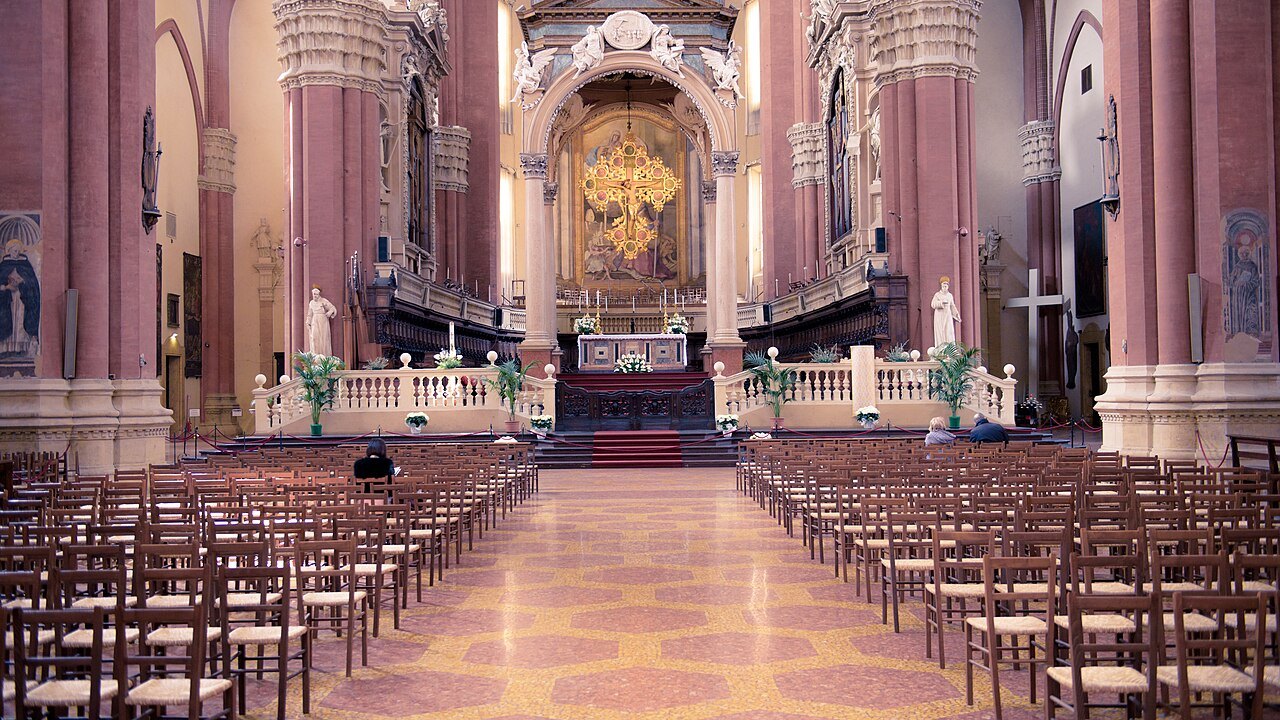
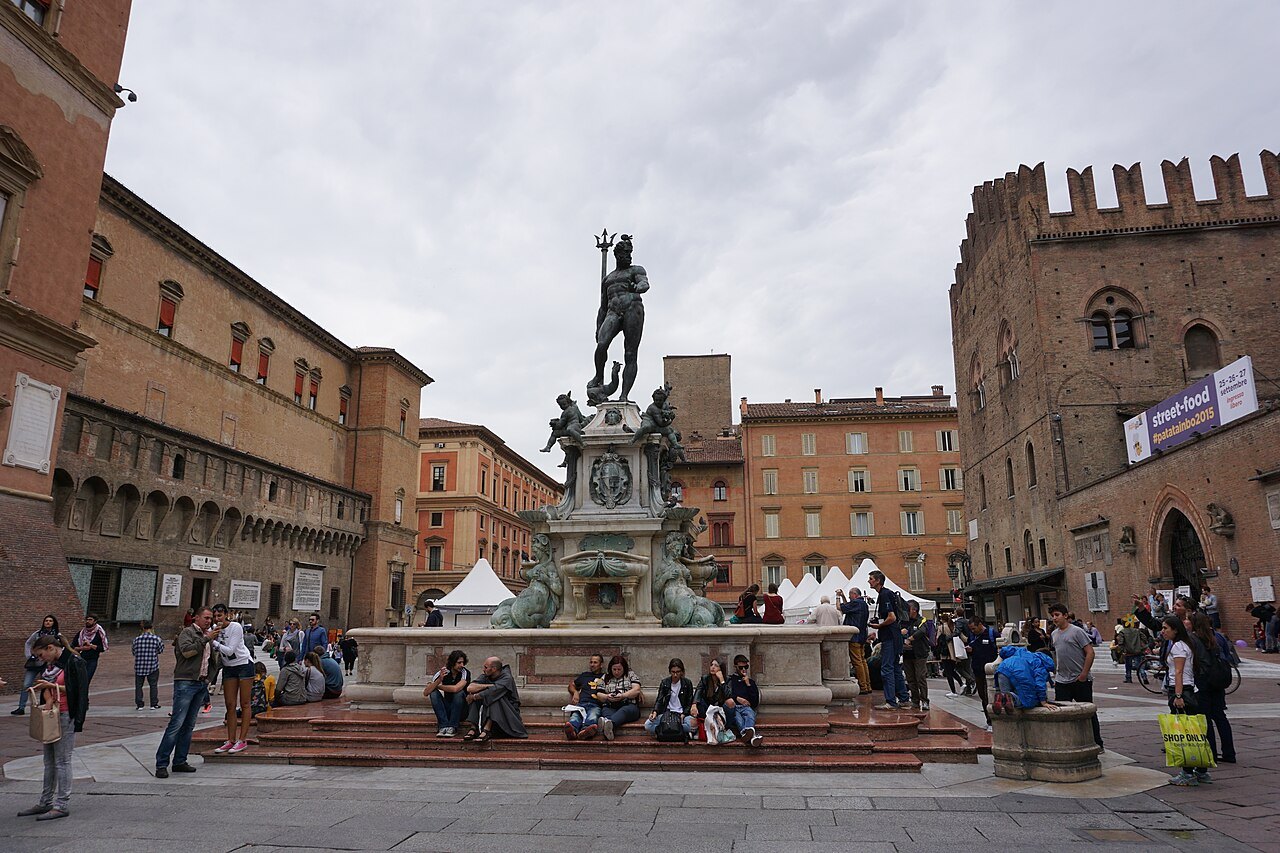
The whispering corner works best as a short pause rather than a destination in itself, something to slot between the square's larger draws. San Petronio dominates the southern side of the piazza with a facade that was never finished, the Fontana del Nettuno sits just beyond the Voltone in the piazza that shares its name, and Palazzo d'Accursio holds collections worth a slower visit if you have the time. The Voltone connects two of these spaces physically, so there's no need to go out of your way; you'll likely pass through it anyway while crossing from one side of the square complex to the other.
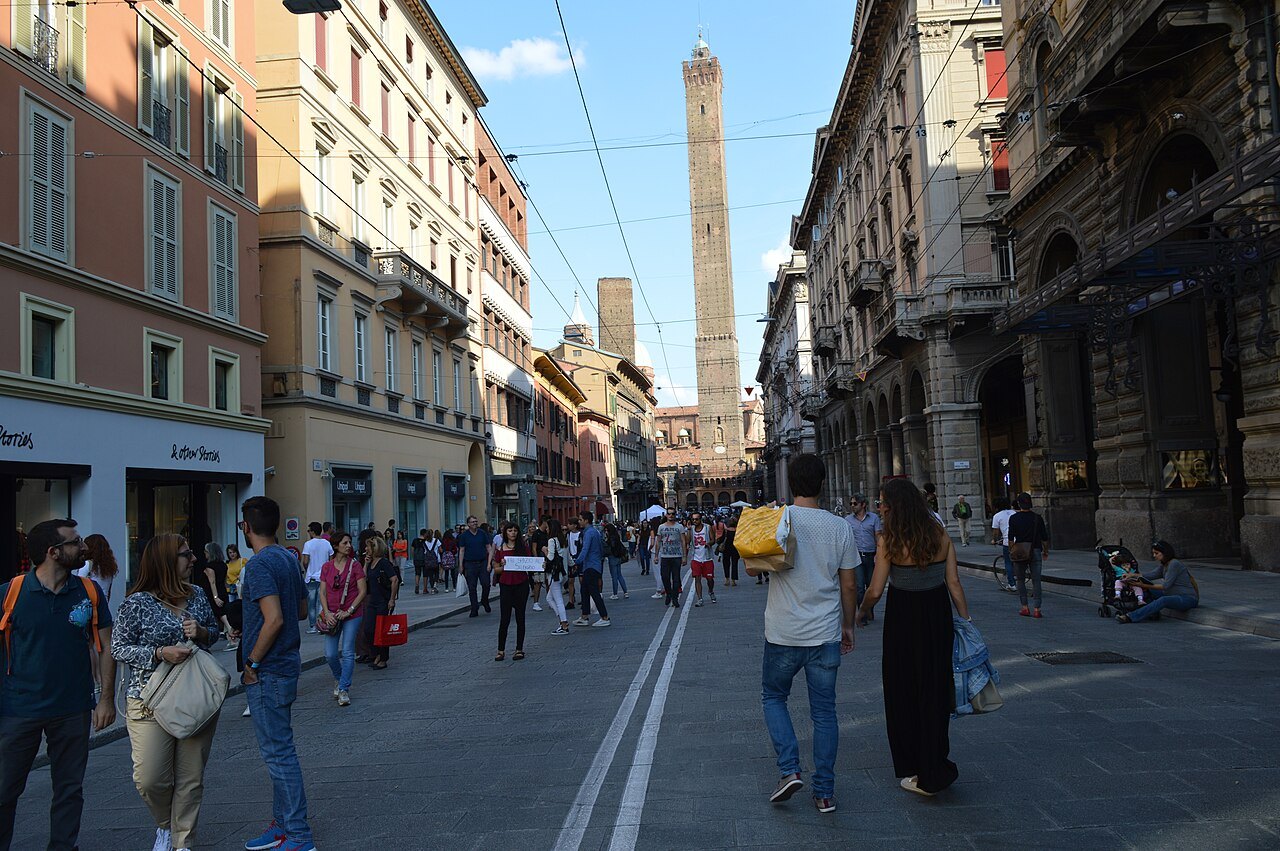
If you're building a longer loop through the medieval center, the passage also makes a natural stopping point on a walk that takes in the porticoes radiating out from the square. Bologna's arcaded streets were shaped by centuries of civic rule and legal requirement, a story covered in more depth in our piece on why Bologna built arcades and why the law kept them open, and the Voltone is in some ways a cousin to that covered-street logic: a public passage built directly into a government building, designed to keep people moving and sheltered rather than detouring around.
On a wet day, it earns its keep twice over, since the vault keeps you dry while you wait out a shower, and the acoustic trick gives you something to do besides checking the sky. Our notes on how a rainy day in Bologna hardly changes the plan cover other covered spaces nearby if the drizzle sets in for longer than a whisper's worth of patience allows.
 Why Bologna built arcades, and why the law kept them open
 A rainy day in Bologna hardly changes the plan