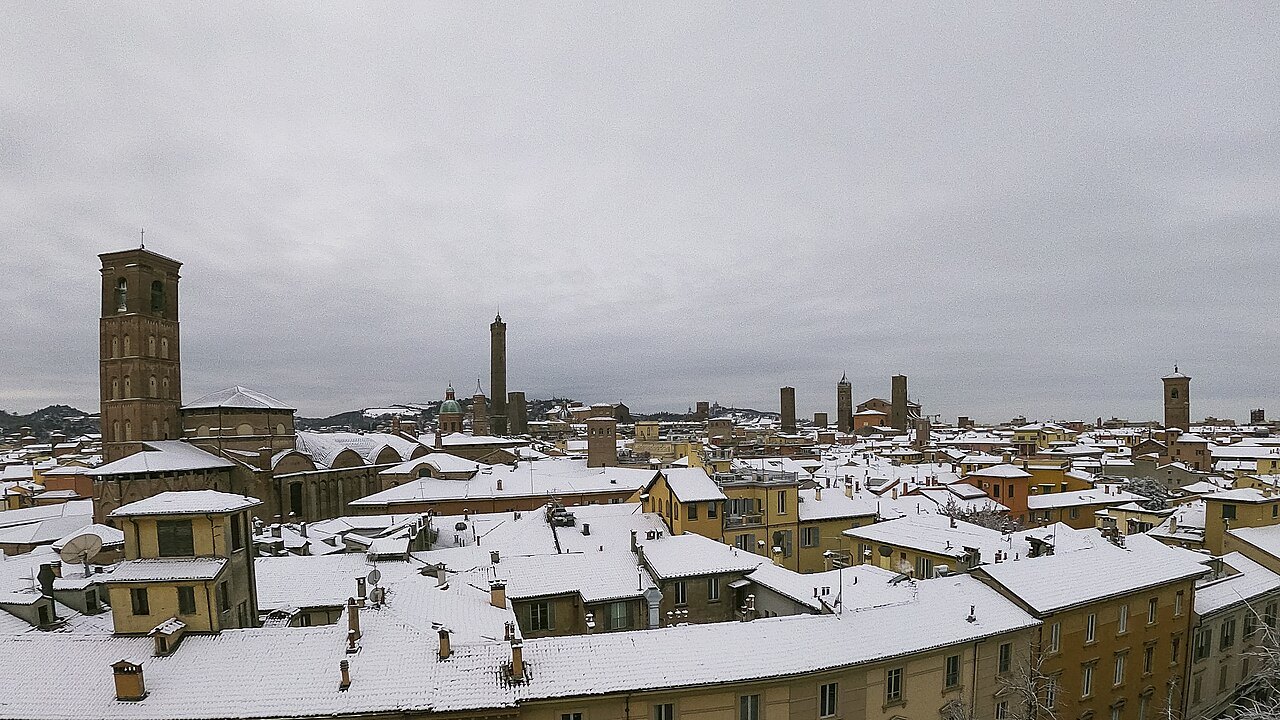
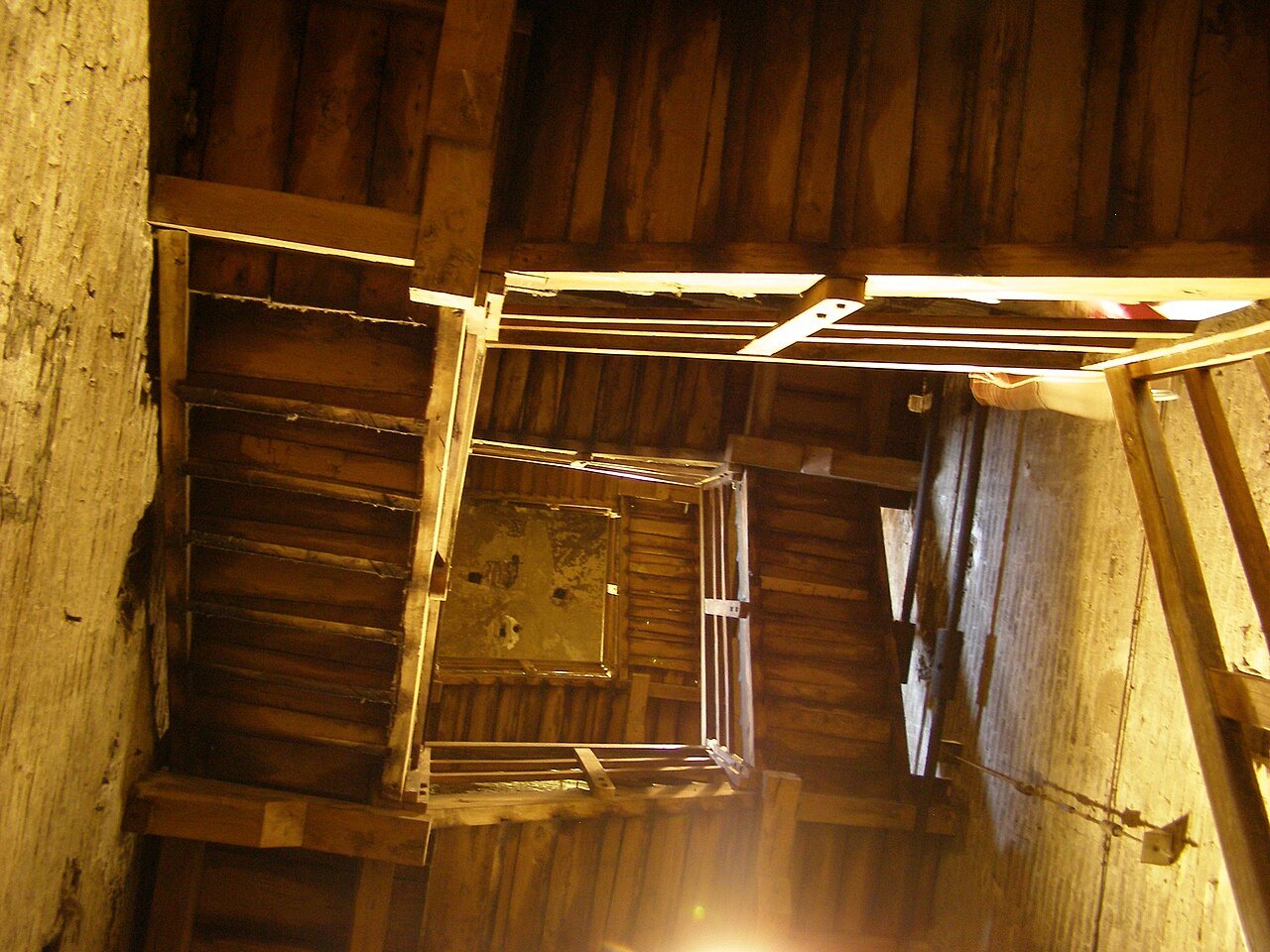
For most of the last century, the first thing a visitor did in Bologna was climb the Torre degli Asinelli. The tower is about 97 meters high, the wooden stair inside it has nearly five hundred steps, and from the top the whole red city lies flat beneath you, the streets fanning out from the foot of the tower like the spokes of a wheel. It is still the best single view in Bologna.
Note It is also the one thing in this city you should not build a morning around without checking first. In late 2023 the neighboring Garisenda was fenced off so engineers could stabilize it, and since then whether the Asinelli climb runs, and how it is sold, has depended on that work. This site does not tell you whether you can go up on the day you arrive. The operator's own page does. Check it before you plan, and read the rest of this piece as the answer to the other outcome.
What the view from the top actually gives you
It helps to be precise about what you are missing, because it is not one thing. The climb gives you three separate experiences, and each of them can be had somewhere else.
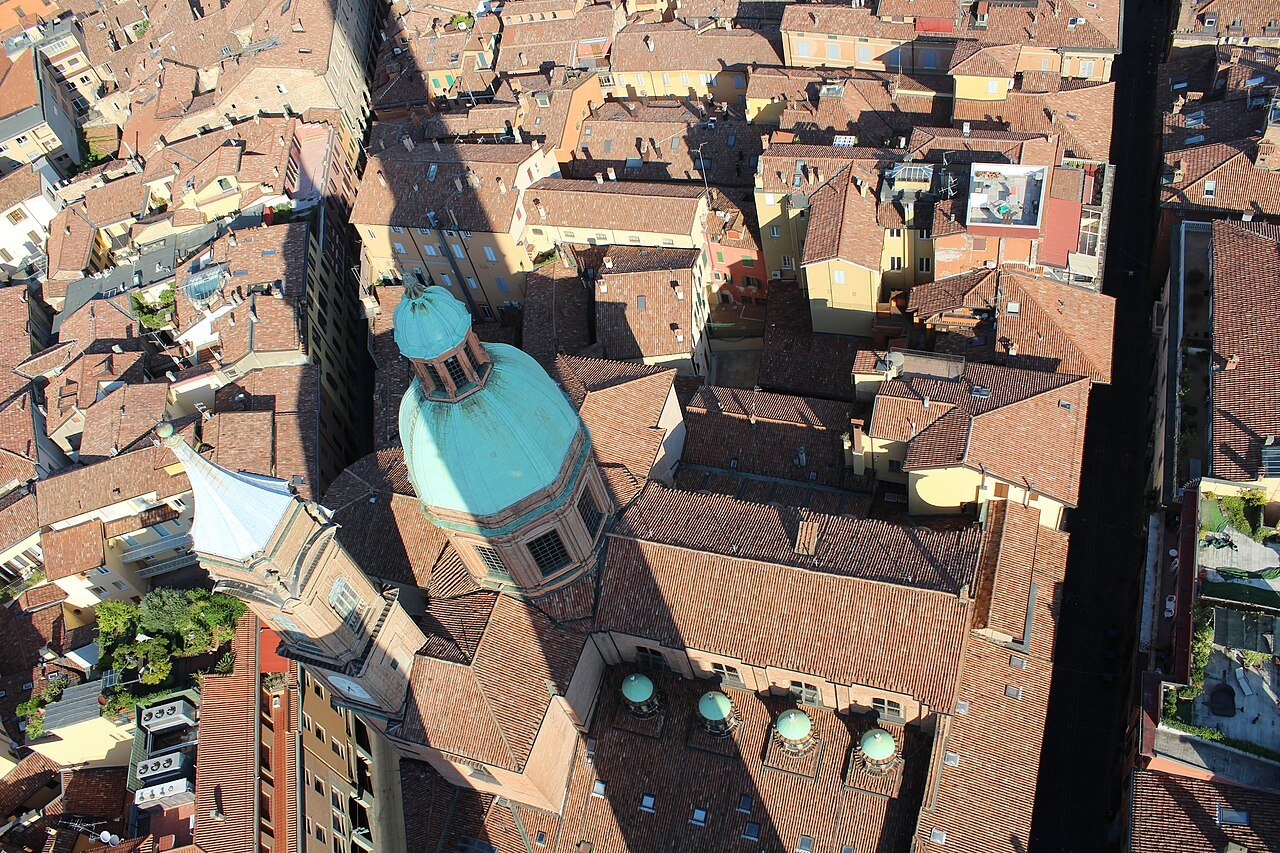
The first is the shape of the city. From the top of the Asinelli you see what no map quite conveys: that Bologna's old center is a single mass of terracotta roofs inside a ring, that the ring is the line of the demolished walls, and that the long straight streets leaving the towers are the old roads out of the city. You understand in a minute why getting around on foot is so easy here.
The second is the towers themselves, looked at from among them. A dozen or so medieval towers still rise out of the roofs, most of them invisible from the street because later houses were built around them. From above you can count them.
The third is the climb: the dark, creaking timber stair, the landings, the way the light changes as you rise. That one cannot be replaced, and if it matters to you, it is worth rearranging a trip around the day it runs.
The hill with a telescope: San Michele in Bosco
For the first experience — the shape of the city — the best alternative is on a hill just south of the old center. San Michele in Bosco is a former monastery with a church, and the square in front of it looks straight down over Bologna. People who live here will tell you it is the finest view of the city after the Asinelli itself, and on a clear day it carries far out across the plain.
Inside the complex is one of Bologna's quieter wonders. A corridor built to connect the monks' cells runs for about 162 meters and ends in a window aimed precisely at the Torre degli Asinelli, some 1.4 kilometers away. Locals call it il cannocchiale, the telescope. Because of the way the corridor frames the tower, it plays a trick on the eye: walk away from the window and the tower seems to grow; walk toward it and it shrinks.
Note The complex is also home to a working orthopedic hospital, so access to the corridor is not the same as access to the square outside. The square is the reliable part. Ask on site, or check before you go, whether the corridor is open to visitors that day.
The long way up: San Luca
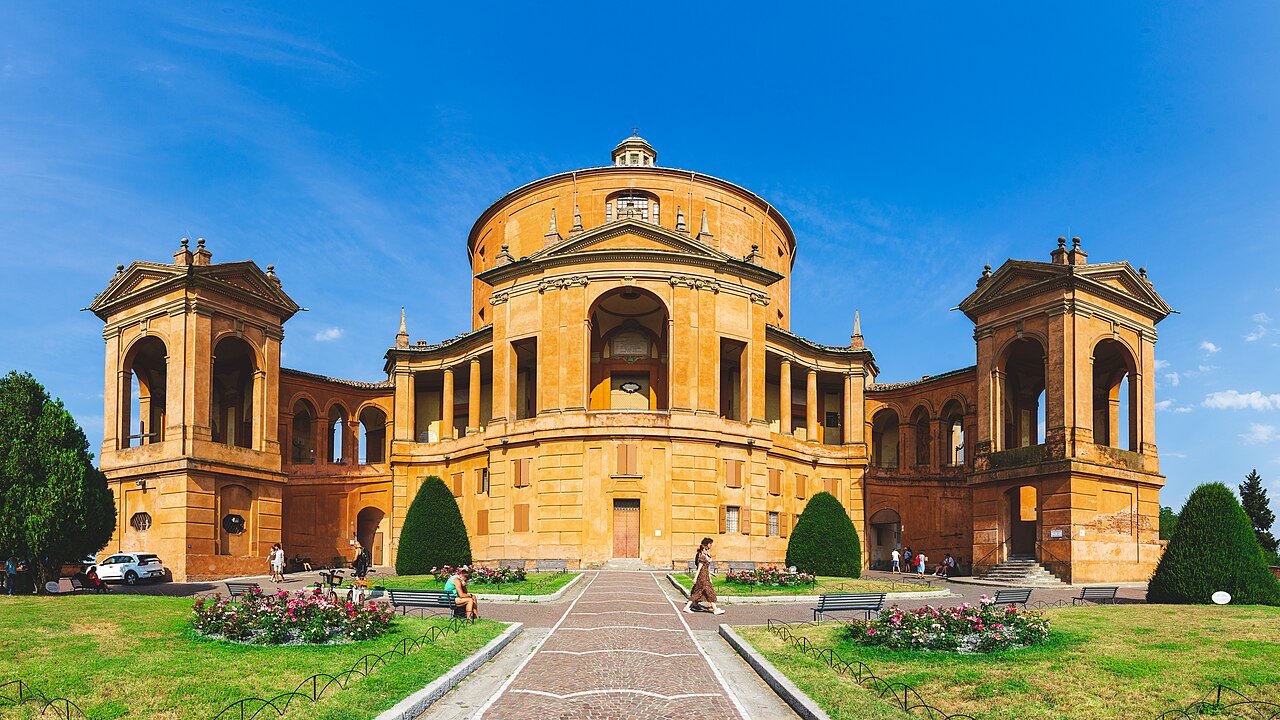
If you would rather earn the view, walk to San Luca. The sanctuary stands on the Colle della Guardia, south-west of the city, and it is reached on foot under the longest portico in the world: nearly four kilometers of arches from Porta Saragozza, most of it climbing once you pass the Arco del Meloncello. Allow about an hour at an unhurried pace.
From the top the view runs the other way. Instead of looking down into the center, you look out over the whole city with the Apennine foothills behind you, and on the skyline you can pick out the Asinelli, small and unmistakable. It is the view that shows you how Bologna sits in its landscape, which the tower itself cannot.
The portico makes this walk possible in rain and in the heat of summer, so it is a good use of a day the tower is not an option. If the weather is poor all day, see what a rainy day changes.
From below, which is how Dante saw it
For the second experience — the towers — you do not need height at all. You need to know where to stand.
The classic view is from via Rizzoli, walking east from the Neptune fountain, when the two towers close the end of the street. It is the photograph on half the postcards in the city, and it is at its best in the late afternoon, when the brick warms up.
The less obvious one is directly beneath them. Stand close to the base of the Asinelli and look straight up: the tower seems to lean over you, and the Garisenda, cut down in the fourteenth century when its foundations gave way, leans visibly beside it. In the Inferno, Dante compares a stooping giant to the Garisenda seen from below as a cloud passes over it, when the tower appears to fall toward you. On a windy day with fast clouds you will see exactly what he meant, and it costs nothing but a crick in the neck.
Then walk the old center and look up at the corners. The towers that survive are mostly hidden in plain sight among later houses. Towers and gates explains how to recognize them.
A quieter height in the middle of town
The Montagnola, on the northern edge of the center, is Bologna's oldest public park, set on a mound built up over centuries. It is not a viewpoint in the same league as the hills — you are only a little above the street — but its terrace and the grand stair down to via dell'Indipendenza make a pleasant pause if you arrive at the station and want a first look at the city before you plunge into it.
How to fit it together
If the climb is running, do it early in your stay, because it makes everything afterward easier to place. If it is not, the most satisfying substitute is a pair: San Michele in Bosco for the shape of the city, and the foot of the towers for the towers themselves. Add the walk to San Luca on a day you have legs for it.
Whichever you choose, do the elevated view before your first evening under the arcades if you can. Seeing the streets from above first turns a pleasant walk into one you can read.
And keep checking. The stabilization work on the Garisenda is a long project, and the arrangements for the Asinelli are the part of this city most likely to change between one visit and the next. See booking ahead for what else is worth arranging before you arrive.
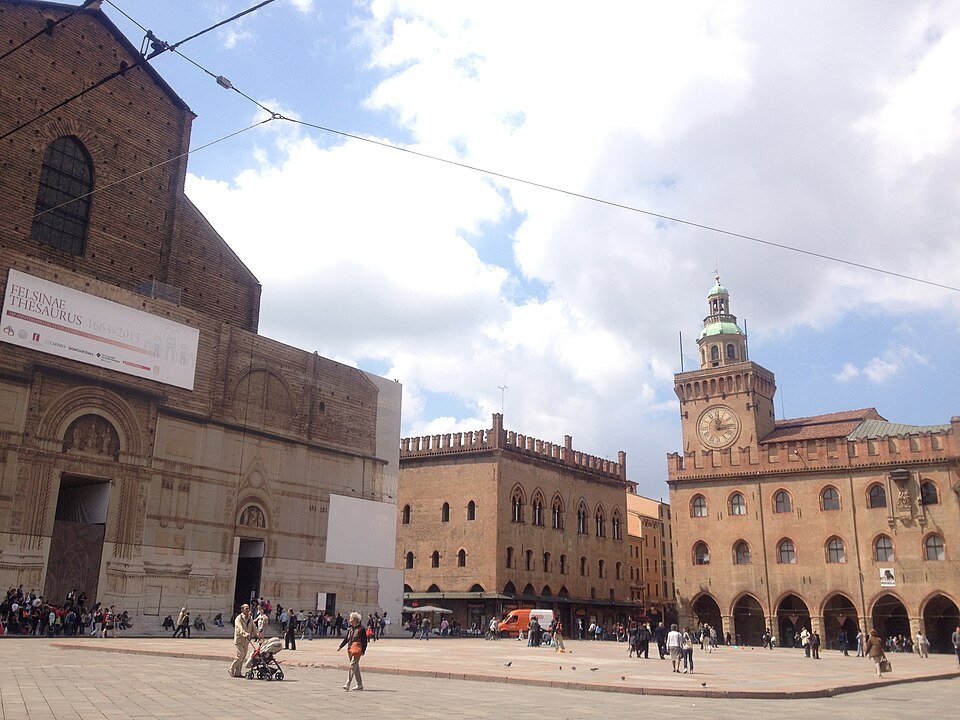 Spend your first evening in Bologna under the arcades
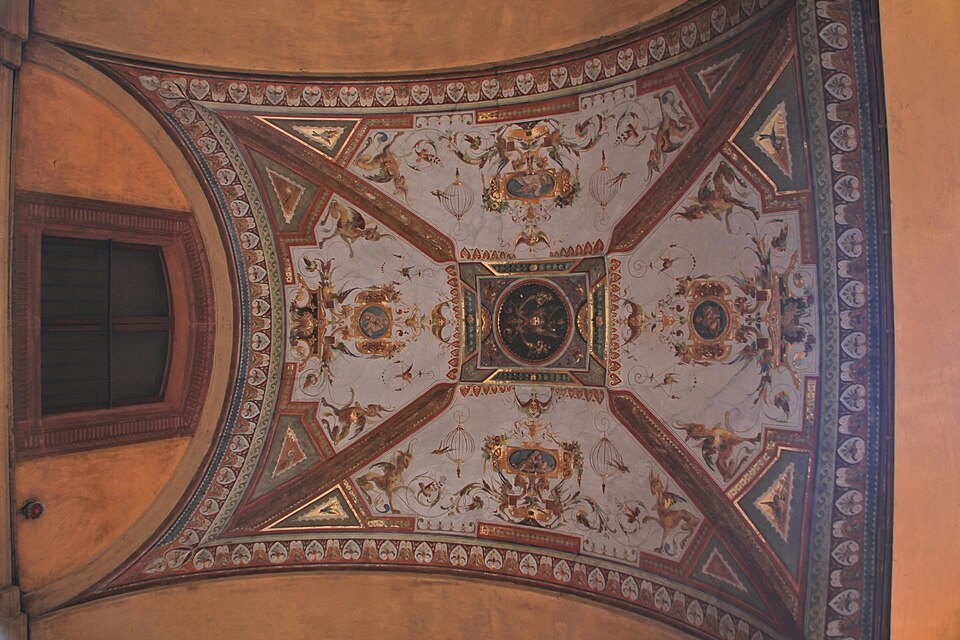 A rainy day in Bologna hardly changes the plan
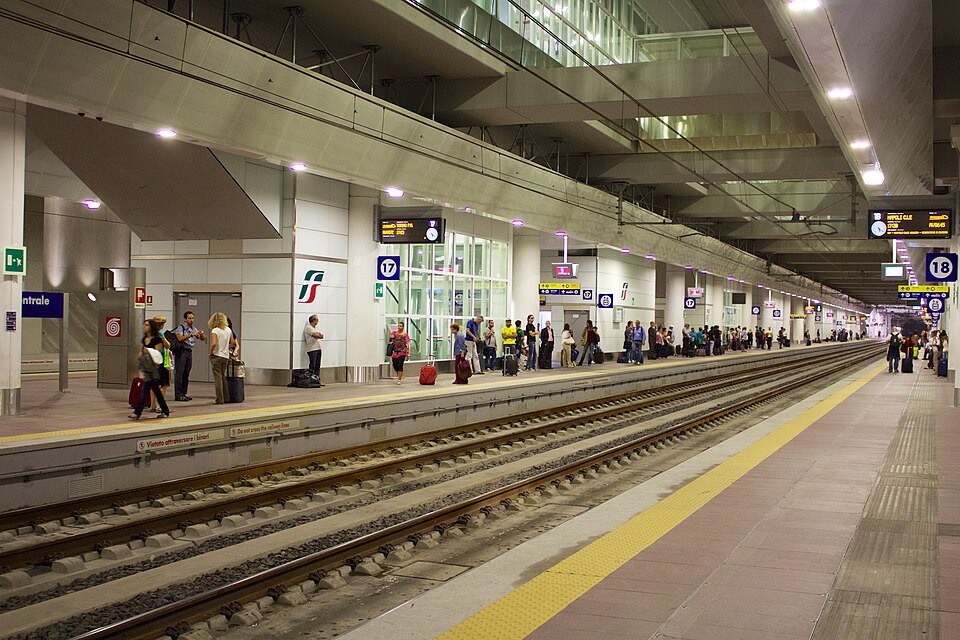 Choosing between Bologna and Florence as a base changes what your days look like