
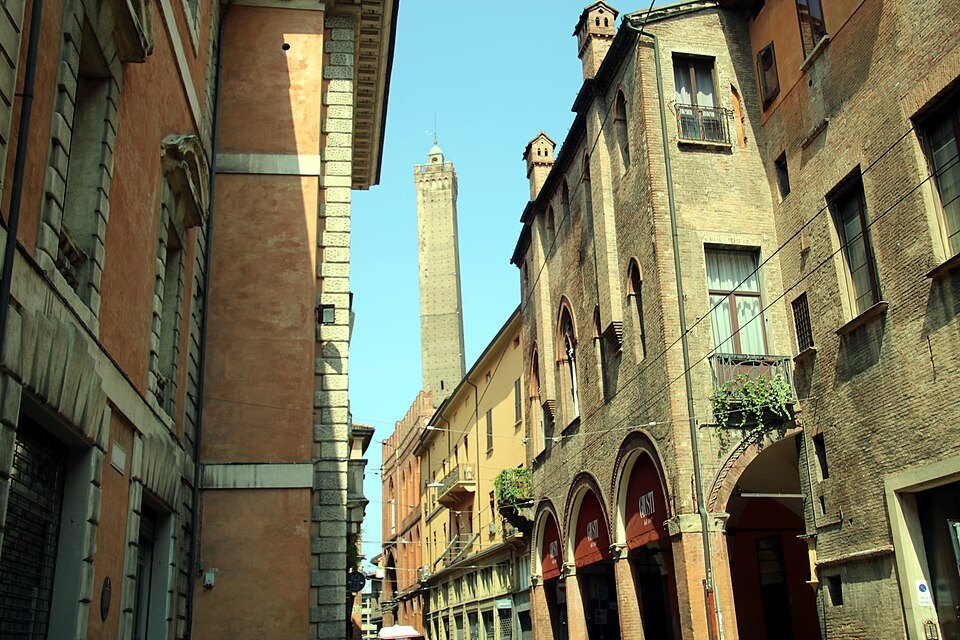
Everyone who visits Bologna photographs the Due Torri, the leaning pair that mark the old city's historic crossroads. Far fewer visitors realize that those two famous towers are only the survivors that stayed visible. Bologna was once a forest of private fortified towers, built by rival noble families to defend themselves and to show off, and most of that forest is still standing — it has just been absorbed into the ordinary houses, shops, and apartment buildings that grew up around and over it. Learning to see these buried towers turns a normal stroll through the porticoed streets into a kind of treasure hunt.
Why a city of towers became a city of houses
In the medieval period, Bologna's leading families competed to build the tallest private tower they could afford, both for defense in an era of street feuds and as a straightforward display of wealth. Over the following centuries most of these towers became impractical, unstable, or simply unfashionable. Rather than being demolished outright, many were cut down to a safer height, re-roofed, and folded into later buildings — a new façade went up around the old stone shaft, floors were added inside it, and the tower effectively became the core of an apartment block or a row house. That is why, walking through the center today, you can pass dozens of structures with a tower quietly hiding inside their walls without ever suspecting it.
The engineering story behind the surviving giants is itself part of this picture. If you want to understand why the taller of the Due Torri has always needed careful watching, it's worth reading about why the Garisenda leans and what engineers are doing about it — the same structural pressures that threaten a famous tower also explain why so many lesser ones were shortened rather than risked.
What to actually look for on the street
Spotting a hidden tower is mostly a matter of looking up and noticing where a building stops behaving like the rest of the street.
- A change in material partway up. Original medieval towers were built in rough, heavy stone or dark brick at the base, often with very little ornament. If a building's ground floor looks centuries older and plainer than the smoother, lighter floors above it, that base may well be the stump of a tower.
- An unusually narrow, squared-off footprint. Most Bolognese houses follow the gentle, irregular rhythm of the street. A tower-turned-house tends to be a tall, almost square block that interrupts that rhythm, sometimes set slightly forward or back from its neighbors.
- Small, deep-set window openings low down. Original tower windows were narrow slits built for defense, not light. Even where later owners cut larger windows into upper floors, you can sometimes still see the ghost of the old slit openings in the stonework near street level.
- A roofline that doesn't match. Towers were usually topped later with ordinary pitched or flat roofs quite different in style from the stonework below, because the original defensive crown was removed long ago.
Tip: the hunt works best in the early morning or early evening, when low sunlight rakes across the façades and throws the change in masonry into much sharper relief than it shows at midday.

Streets where the hunt pays off
The densest concentration of absorbed towers lies in the lanes radiating out from the Due Torri, particularly toward the university district and down into the old market lanes of the Quadrilatero. Walking slowly here, rather than cutting through quickly, is the only way to catch these buildings — they don't announce themselves with plaques. The university quarter is especially rewarding, since student housing and old faculty buildings have long occupied former noble residences built directly onto tower bases.
Don't neglect the quieter streets either. Away from the main squares, in the residential lanes that make up Bologna's wider neighborhoods, you'll find modest apartment blocks whose ground floors are, on close inspection, clearly much older and heavier than what sits above them — these are some of the best-preserved examples precisely because nobody has ever tried to make a feature of them.
If you'd rather follow a structured route than wander at random, the city's suggested itineraries include walks that pass a good number of these buildings along the way, which saves you the trouble of guessing which streets are worth the detour.
Climbing what's left, and seeing the rest from above
Only a small number of Bologna's towers can still be climbed, and the arrangements for doing so change, so always check directly with the relevant operator rather than assuming a tower is currently open before you plan around it; see Due Torri for the details that matter and booking ahead for how far in advance that's worth doing. If climbing isn't possible on your visit, or isn't something you want to do, it's still entirely possible to get a sense of the city's old skyline — the piece on where to see Bologna from above when you cannot climb the tower covers the alternatives, several of which also give you a clear view down onto rooftops where you can pick out other stubby, tower-shaped blocks you'd never notice from street level.
Note A warning worth repeating: these buildings with towers inside them are, almost without exception, private homes or businesses. Admire the masonry from the street, but there's no public access to the tower interiors beyond the handful of sites set up for visitors.

Making a rainy afternoon of it
Tower-spotting is a good option when the weather turns, since it requires nothing more than an umbrella and a willingness to look up under the shelter of the porticoes that line nearly every street in the center. For a broader sense of how a wet day in Bologna still works perfectly well, see a rainy day in Bologna hardly changes the plan. The same arcaded streets that keep you dry are often the ones hiding the best examples, since the porticoes themselves were frequently built onto, or around, the ground floors of these old towers.
Once you've trained your eye on a couple of clear examples near the Due Torri, you'll start noticing candidates everywhere — a plain stone base here, a too-narrow building there — and the center of Bologna starts to look less like a finished medieval city and more like a layered one, with eight centuries of ordinary life built quietly on top of its fortified past.

 Why the Garisenda leans, and what the engineers are doing about it
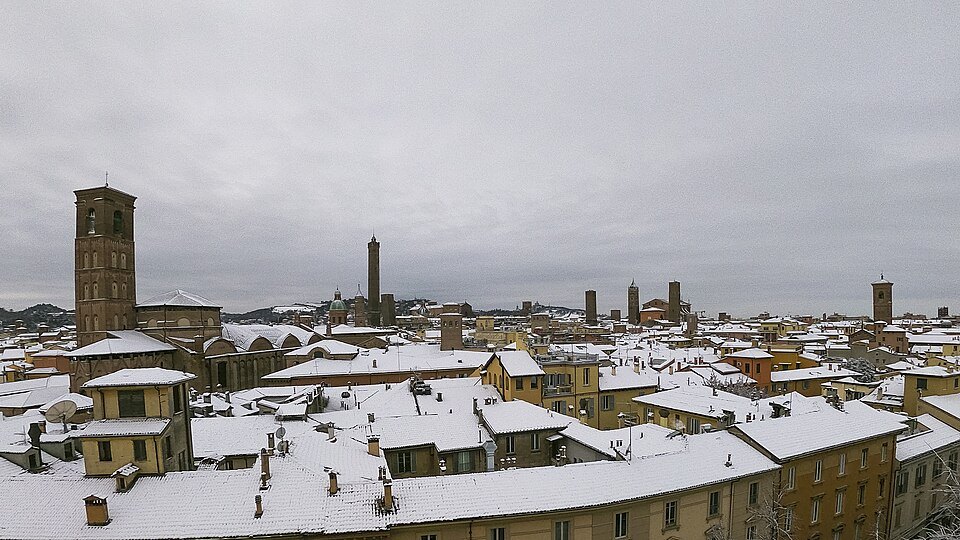 Where to see Bologna from above when you cannot climb the tower
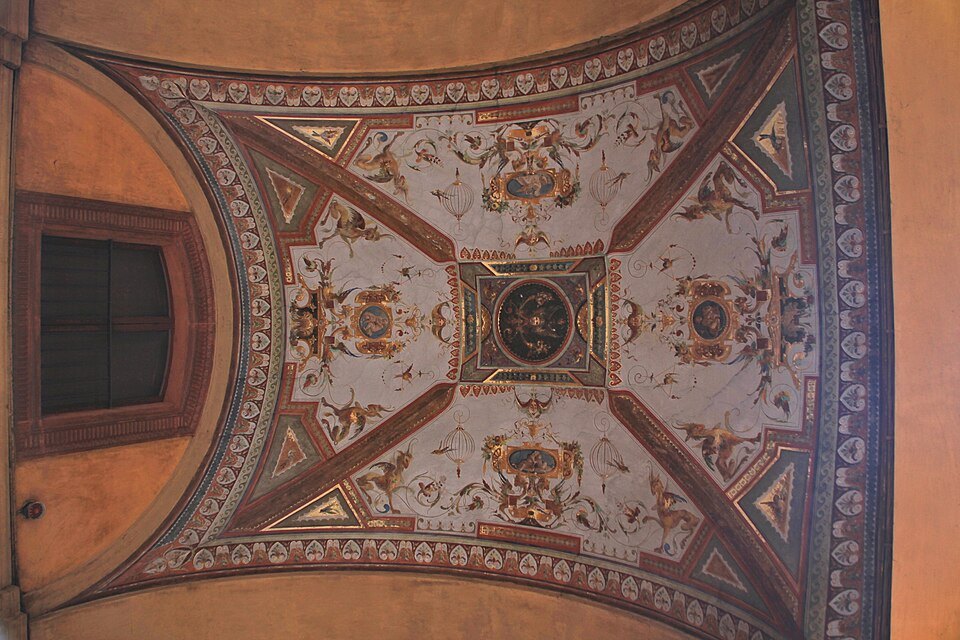 A rainy day in Bologna hardly changes the plan